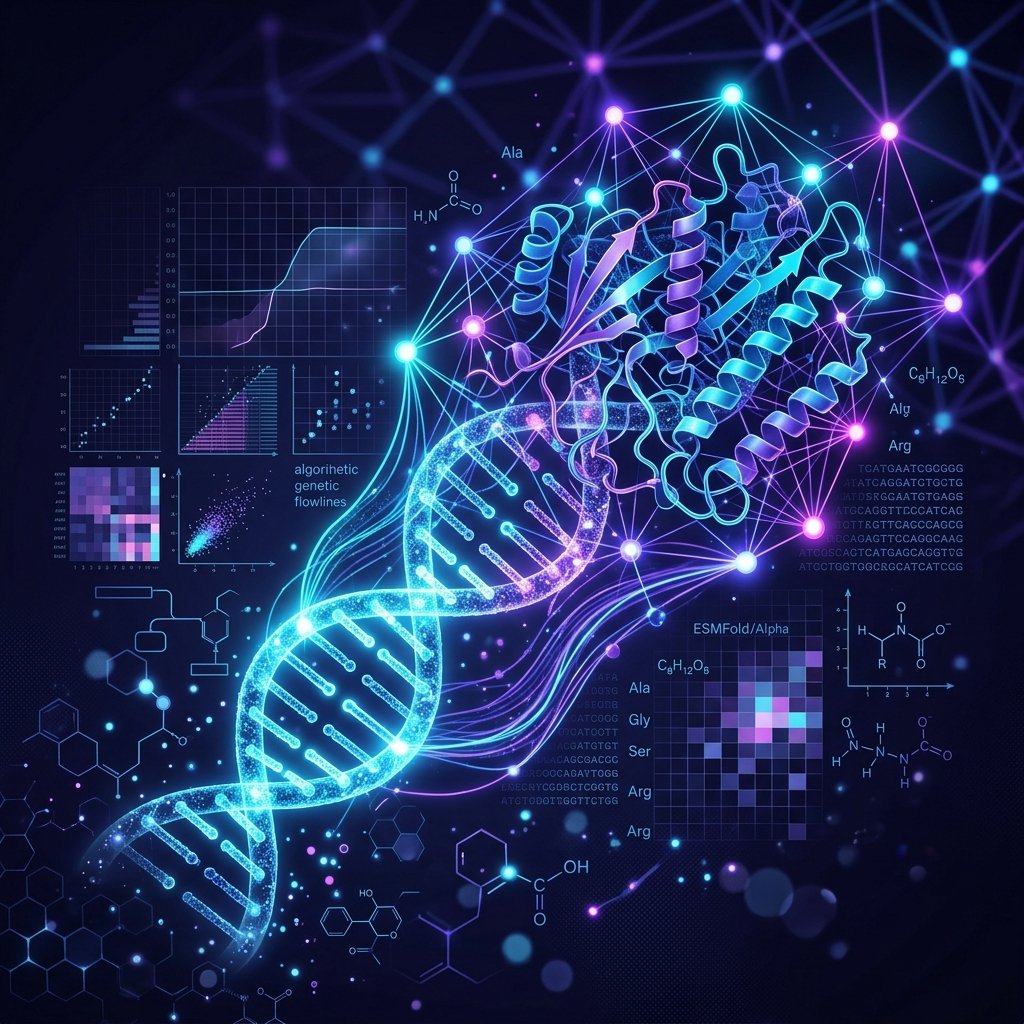
1. The Folding Challenge
Understanding the three-dimensional structural geometry of macromolecules is crucial for targeting disease pathways. Traditional experimental methods, such as X-ray crystallography and cryogenic electron microscopy (cryo-EM), require months of laboratory execution and significant resources.
2. Transformers in Protein Design
Using transformer model architectures, such as Meta’s ESMFold and Google DeepMind’s AlphaFold pipelines, researchers can predict secondary and tertiary protein structures from raw, unaligned amino acid sequences in minutes. These models treat protein sequences like natural language text, predicting token interactions based on massive database representations.
This computational acceleration allows pharmaceutical labs to analyze ligand binding affinities and select candidates for in-vitro testing with unprecedented speed, accelerating the pre-clinical validation pipeline by orders of magnitude.