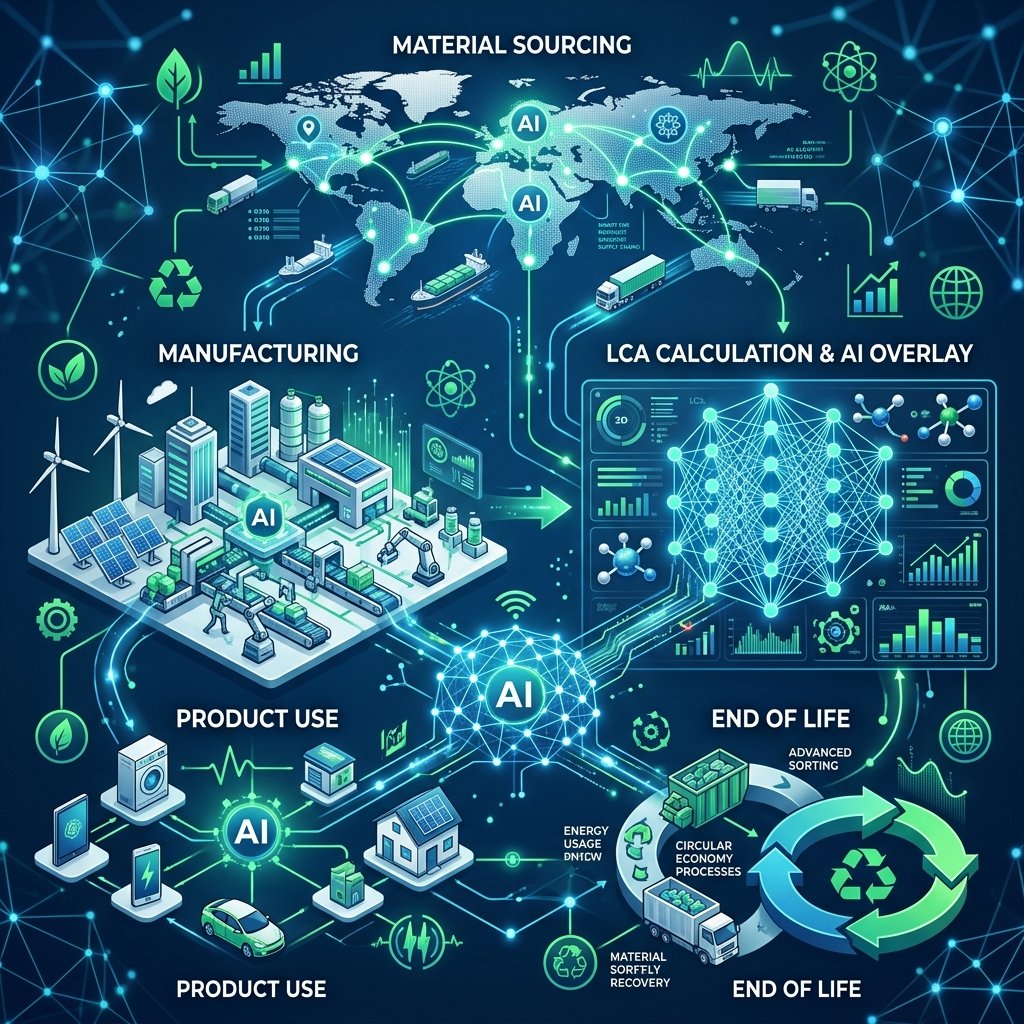
1. Carbon Accounting Gaps
Comprehensive Life Cycle Assessments (LCAs) are frequently hindered by data sparsity. Upstream supply chains for complex electronics or chemicals often span dozens of regions, many of which lack transparent reporting infrastructures or standardized data registries.
2. Neural Footprint Solvers
By deploying multi-variate neural regression models, researchers can fill missing gaps in openLCA database structures. The models utilize proxy metrics (such as regional grid coal-ratio, industrial water usage, and physical transit weight) to predict carbon footprint vectors with high accuracy.
This predictive framework provides environmental auditors with a reliable, statistically validated baseline to identify major emission centers in complex supply chains, even when direct supplier telemetry is unavailable.