Programme Parameters
Advanced Postgrad
3 Days (4.5 Hrs)
Online (e-LMS)
• Prior working knowledge of the field and comfort with core tools and quantitative reasoning.
• A laptop or desktop with a stable internet connection.
• Willingness to complete assignments and the capstone project.
About This Course
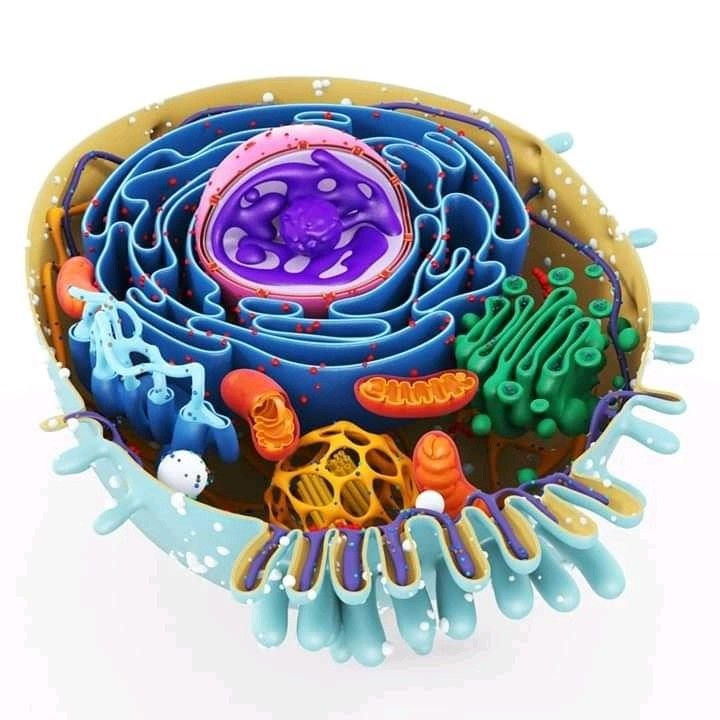
Spatial Biology: Immersive 3D Visualization of Cellular Structures explores a fast-emerging field that puts molecules and cells back in their spatial context. You learn what spatial biology reveals that bulk methods miss, the spatial-omics and imaging technologies behind it, and how to visualise cellular structures and spatial data immersively in 3D. The course connects spatial data to biological insight in tissue architecture and disease. You finish able to reason about spatial-biology data and its 3D visualisation. A verified e-Certificate of competency and e-Marksheet from the Deep Science & Technology Consortium.
🎯 Program Aim
This course covers spatial biology and immersive 3D visualisation — mapping and visualising cellular structures and spatial molecular data in three dimensions.
📋 Course Objectives
1. Explain what spatial biology reveals.
2. Survey spatial-omics and imaging methods.
3. Reconstruct cellular structures in 3D.
4. Visualise spatial molecular data immersively.
5. Connect spatial data to biological insight.
👥 Who Should Enroll?
• Cell and molecular biologists
• Imaging and spatial-omics researchers
• Bioimaging and visualisation specialists
• Students of spatial biology
🚀 Key Learning Outcomes
• An understanding of spatial biology.
• A 3D-visualisation perspective.
• A foundation in spatial-omics.
• A verified e-Certificate of competency and e-Marksheet from the Deep Science & Technology Consortium.
💎 What You'll Gain
Live & Recorded Sessions
Lifetime access to class recordingse-Certificate on Completion
Cryptographically verified credentialPost-Programme Support
Direct access to mentors & councilHands-On Experience
Notebooks, real-world code & datasetsCurriculum Outline
Day 1 – Introduction to Spatial Biology & 3D Visualization Techniques
Explore core concepts of spatial biology and cellular architecture • Compare key imaging modalities – confocal, electron, super‑resolution, light‑sheet • Integrate multi‑omics data with 3D image stacks • Apply 3D visualization tools (Fiji, Imaris) to reconstruct cellular structures
Day 2 – Advanced 3D Visualization & Data Interpretation
Perform advanced microscopy techniques (immunofluorescence, 3D tags) • Integrate spatial transcriptomics and proteomics into 3D models • Map cellular pathways and protein interactions in three dimensions • Leverage machine‑learning pipelines to automate 3D data analysis
Day 3 – Data Analysis, Model Integration & Clinical Applications
Integrate 3D imaging data with computational models (MATLAB, Python) • Apply AI‑driven feature extraction and classification on 3D datasets • Execute 3D drug‑testing simulations and clinical visualizations • Explore future trends – digital twins, tissue engineering, regenerative medicine
Technical Specifications
| Parameter | Requirement |
|---|---|
| Covered Tool / Platform | Fiji |
| Covered Tool / Platform | Imaris |
| Covered Tool / Platform | D Slicer |
| Covered Tool / Platform | Zen |
| Covered Tool / Platform | ImageJ |
| Covered Tool / Platform | Cytoscape |
| Covered Tool / Platform | MATLAB |
| Covered Tool / Platform | Python |
Frequently Asked Questions
Scholar Feedback & Reviews
Based on 0 scholar submissions
Rating Breakdown
No verified reviews published yet. Be the first to share your academic experience.
Leave Scholar Feedback
Your rating will help prospective scholars. Ratings below 3 stars are routed privately to the faculty mentor for immediate response.