Programme Parameters
Graduate / Intermediate
3 Days (4.5 Hrs)
Online (e-LMS)
• A basic understanding of the subject area and fundamental programming or scientific concepts.
• A laptop or desktop with a stable internet connection.
• Willingness to complete assignments and the capstone project.
About This Course
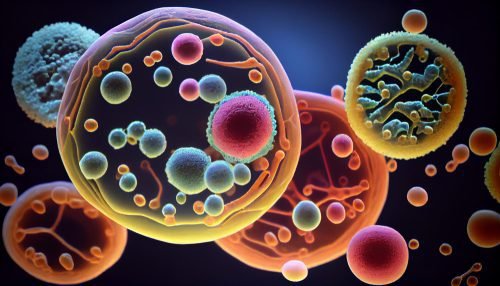
Organoids and advanced 3D culture systems represent one of the most transformative technologies in biomedical research. Derived from stem cells or patient tissues, organoids can self-organize into miniaturized, physiologically relevant models of organs, enabling powerful platforms for drug efficacy testing, toxicity evaluation, genetic studies, and disease modeling. Every participant receives a verified e-Certificate and e-Marksheet from the Deep Science & Technology Consortium.
🎯 Program Aim
Organoids and advanced 3D culture systems represent one of the most transformative technologies in biomedical research. Derived from stem cells or patient tissues, organoids can self-organize into miniaturized, physiologically relevant models of organs, enabling powerful platforms for drug efficacy testing, toxicity evaluation, genetic studies, and disease modeling.
📋 Course Objectives
1. Apply biotechnology methods to authentic research and industry problems.
2. Produce a reproducible, portfolio-ready project you can cite in a thesis, paper, or job application.
👥 Who Should Enroll?
• Master's and senior undergraduate students specializing in biotechnology
• R&D engineers and working professionals applying biotechnology in industry
• Academics and educators building research or teaching capacity in biotechnology
🚀 Key Learning Outcomes
• A portfolio-grade biotechnology deliverable you can defend and extend.
• A verified e-Certificate of competency and e-Marksheet from the Deep Science & Technology Consortium.
💎 What You'll Gain
Live & Recorded Sessions
Lifetime access to class recordingse-Certificate on Completion
Cryptographically verified credentialPost-Programme Support
Direct access to mentors & councilHands-On Experience
Notebooks, real-world code & datasetsCurriculum Outline
The Range of 3D Culture
• Spheroids, organoids, organ-on-chip and explants — what each can answer
• Adult stem cell against iPSC-derived organoids and their differing maturity
• What 3D culture does not model: vasculature, immune cells, systemic exposure
Establishing and Maintaining Lines
• Tissue dissociation, embedding and the niche factors each organ type requires
• Matrigel lot variability and the move toward defined synthetic matrices
• Passaging, cryopreservation and drift over extended culture
Proving the Model Is What You Claim
• Marker expression, histology and comparison against the parent tissue
• Functional assays such as forskolin swelling for genuine physiological readout
• Authentication and mycoplasma testing as basic and frequently skipped hygiene
Efficacy and Toxicity Testing
• Dose-response design and replicate structure in an expensive 3D format
• Hepatotoxicity and nephrotoxicity models and their predictive performance
• Combination screening and the rapid growth of the plate count
Modelling and Regulatory Context
• Biobanks of patient-derived organoids for disease and mutation studies
• The FDA Modernization Act and the standing of non-animal models
• Reproducibility problems that keep organoids out of regulated toxicology
Technical Specifications
| Parameter | Requirement |
|---|---|
| Covered Tool / Platform | RStudio |
Frequently Asked Questions
Scholar Feedback & Reviews
Based on 0 scholar submissions
Rating Breakdown
No verified reviews published yet. Be the first to share your academic experience.
Leave Scholar Feedback
Your rating will help prospective scholars. Ratings below 3 stars are routed privately to the faculty mentor for immediate response.