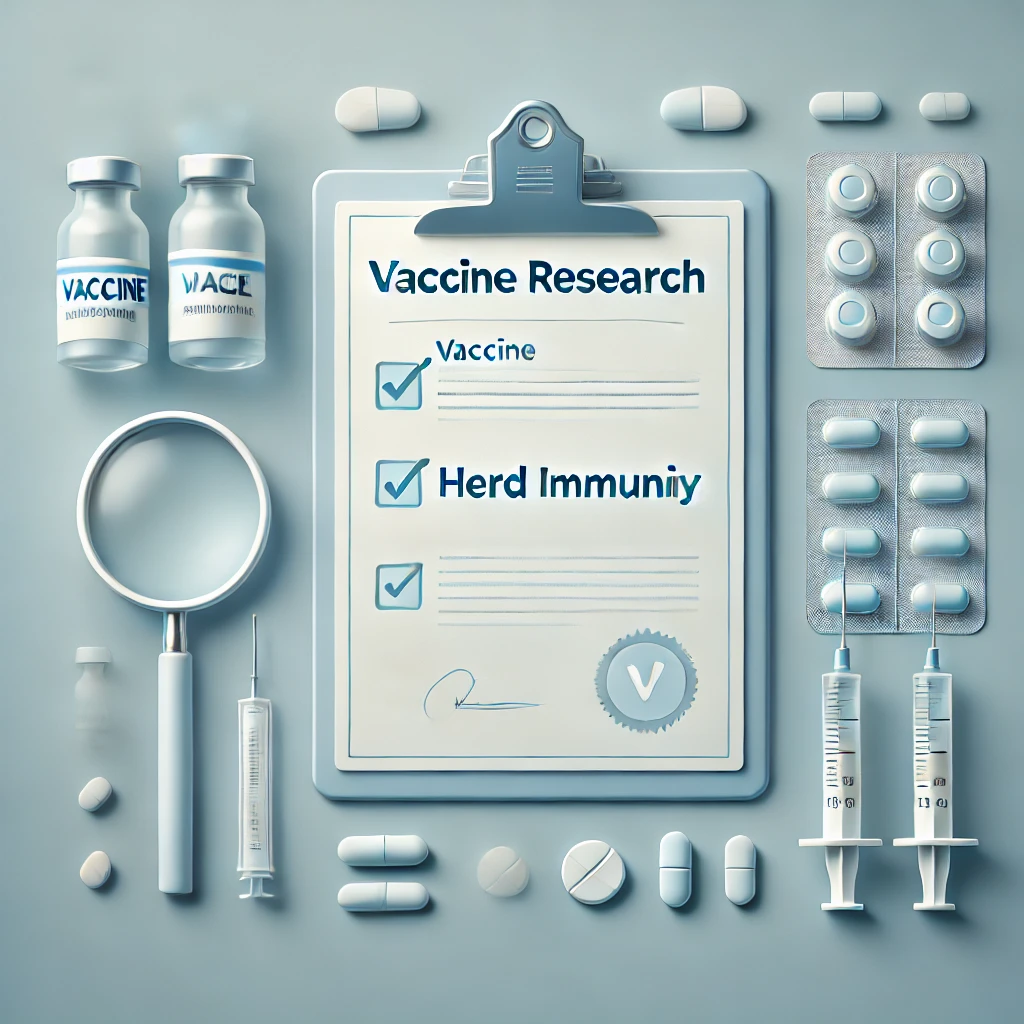
Programme Parameters
Graduate / Intermediate
4 Weeks (40 Hrs)
Online (e-LMS)
• A basic understanding of the subject area and fundamental programming or scientific concepts.
• A laptop or desktop with a stable internet connection.
• Willingness to complete assignments and the capstone project.
About This Course
Herd Immunity and Vaccination Strategies explains one of the most important — and most misunderstood — ideas in public health. You learn the epidemiology behind population immunity: how infections spread, what the basic reproduction number means, and how herd-immunity thresholds are derived. The course covers how vaccines confer protection, the coverage needed to interrupt transmission, and the real-world design of immunisation programmes, including the challenges of hesitancy and equity. Grounded in real disease examples, it gives you a rigorous, evidence-based understanding of how vaccination protects populations. A verified e-Certificate of competency and e-Marksheet from the Deep Science & Technology Consortium.
🎯 Program Aim
This course covers herd immunity and vaccination strategy — the epidemiology of population immunity, thresholds, vaccine coverage and the design of immunisation programmes.
📋 Course Objectives
1. Explain how infections spread and the reproduction number.
2. Derive and interpret herd-immunity thresholds.
3. Understand how vaccines confer protection.
4. Relate vaccine coverage to transmission control.
5. Assess immunisation-programme design and challenges.
👥 Who Should Enroll?
• Public-health and epidemiology students
• Healthcare and immunisation professionals
• Policy and health-communication staff
• Anyone studying infectious disease
🚀 Key Learning Outcomes
• A rigorous understanding of herd immunity.
• The ability to interpret vaccination strategy.
• An evidence-based public-health perspective.
• A verified e-Certificate of competency and e-Marksheet from the Deep Science & Technology Consortium.
💎 What You'll Gain
Live & Recorded Sessions
Lifetime access to class recordingse-Certificate on Completion
Cryptographically verified credentialPost-Programme Support
Direct access to mentors & councilHands-On Experience
Notebooks, real-world code & datasetsCurriculum Outline
Foundations of Herd Immunity and Vaccination Strategies
Analyze the core biological principles underlying herd immunity and vaccination strategies, including the role of immune systems and disease transmission dynamics • Develop a comprehensive understanding of the historical development of vaccination strategies and their impact on public health • Evaluate the current challenges and limitations of herd immunity and vaccination strategies, including vaccine hesitancy and emerging diseases
Laboratory Techniques, Protocols, and Data Collection
Configure and operate laboratory equipment for collecting and analyzing biological samples, including PCR machines and spectrophotometers • Design and implement experimental protocols for testing vaccine efficacy and safety, including animal models and cell culture assays • Implement quality control measures to ensure the accuracy and reliability of laboratory data, including data validation and troubleshooting
Bioinformatics Tools and Computational Analysis
Apply bioinformatics tools and databases, such as BLAST and GenBank, to analyze genomic and proteomic data related to vaccine development • Develop computational models to simulate disease transmission and vaccine efficacy, using programming languages such as Python and R • Visualize and interpret complex biological data using data visualization tools, such as heat maps and network analysis
Research Methodology and Experimental Design
Design and propose experimental studies to investigate the efficacy and safety of vaccination strategies, including clinical trials and observational studies • Develop and implement research protocols to collect and analyze data, including survey design and statistical analysis • Evaluate the strengths and limitations of different research methodologies, including randomized controlled trials and systematic reviews
Advanced Herd Immunity and Vaccination Strategies Applications
Analyze the application of advanced technologies, such as mRNA vaccines and gene editing, to improve vaccine development and delivery • Develop strategies to address vaccine hesitancy and improve vaccine uptake, including public health campaigns and community outreach • Evaluate the potential of novel vaccination strategies, such as personalized vaccines and vaccine cocktails, to address emerging diseases
Regulatory Compliance, Bioethics, and Safety Standards
Implement regulatory requirements and guidelines for vaccine development and testing, including FDA and WHO regulations • Analyze the ethical considerations and bioethical principles underlying vaccine development and deployment, including informed consent and risk-benefit analysis • Develop and implement safety protocols to minimize risks associated with vaccine development and testing, including adverse event reporting and risk management
Industry Applications, Career Pathways, and Case Studies
Explore career pathways and job opportunities in the vaccine industry, including research and development, regulatory affairs, and public health • Analyze case studies of successful vaccine development and deployment, including the development of vaccines for emerging diseases • Develop a comprehensive understanding of the vaccine industry landscape, including key players, trends, and challenges
Technical Specifications
| Parameter | Requirement |
|---|---|
| Covered Tool / Platform | Python |
| Covered Tool / Platform | BLAST |
| Covered Tool / Platform | GenBank |
| Covered Tool / Platform | PCR machines |
| Covered Tool / Platform | spectrophotometers |
Frequently Asked Questions
Scholar Feedback & Reviews
Based on 0 scholar submissions
Rating Breakdown
No verified reviews published yet. Be the first to share your academic experience.
Leave Scholar Feedback
Your rating will help prospective scholars. Ratings below 3 stars are routed privately to the faculty mentor for immediate response.