Programme Parameters
Graduate / Intermediate
3 Days (4.5 Hrs)
Online (e-LMS)
• A basic understanding of the subject area and fundamental programming or scientific concepts.
• A laptop or desktop with a stable internet connection.
• Willingness to complete assignments and the capstone project.
About This Course
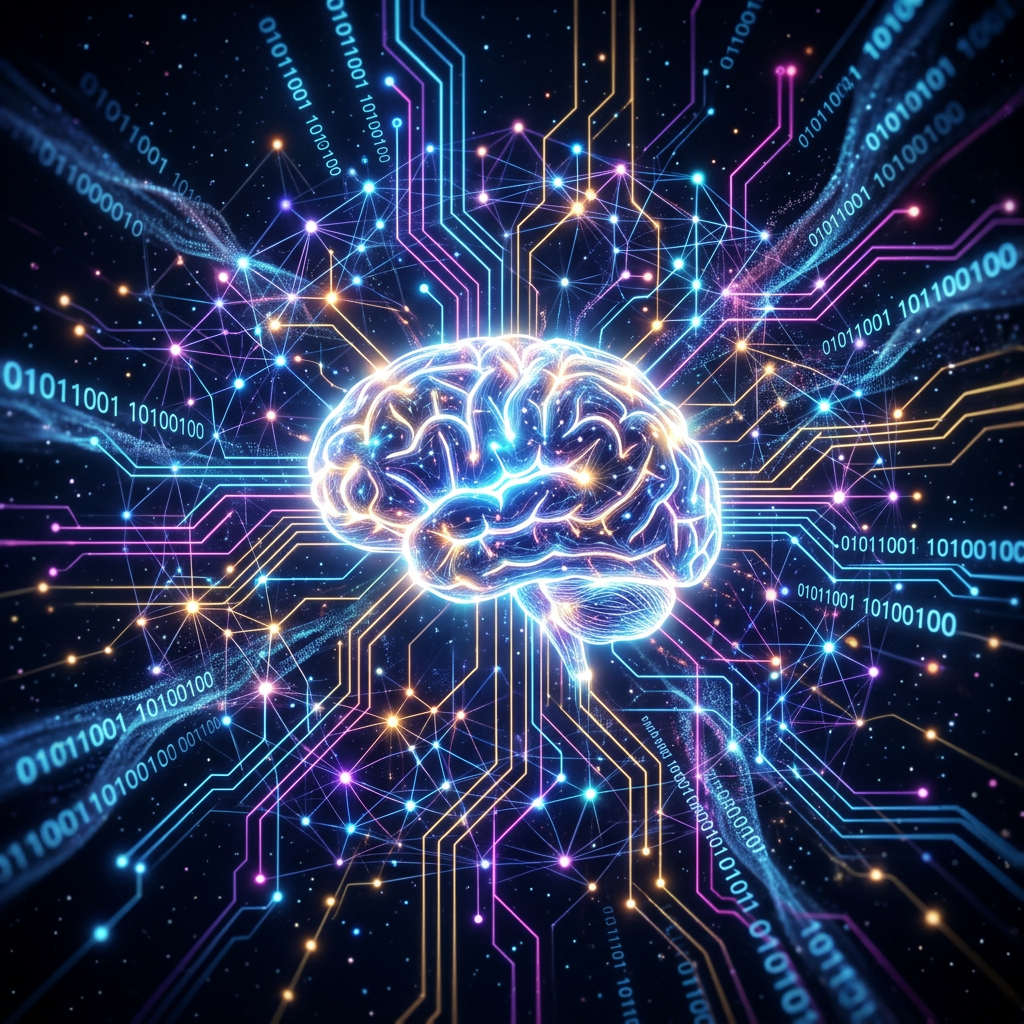
Explore the world of Brain‑Computer Interfaces through hands‑on analysis and classification of P300 signals, empowering participants to decode neural responses and apply advanced signal analytics in BCI applications. Every participant receives a verified e-Certificate and e-Marksheet from the Deep Science & Technology Consortium.
🎯 Program Aim
Explore the world of Brain‑Computer Interfaces through hands‑on analysis and classification of P300 signals, empowering participants to decode neural responses and apply advanced signal analytics in BCI applications.
📋 Course Objectives
1. Master the fundamentals of classification of P300 signals.
2. Put Artificial Intelligence techniques to work on real datasets and case studies.
3. Produce a reproducible, portfolio-ready project you can cite in a thesis, paper, or job application.
👥 Who Should Enroll?
• Master's and senior undergraduate students specializing in Artificial Intelligence
• R&D engineers and working professionals applying Artificial Intelligence in industry
• Academics and educators building research or teaching capacity in Artificial Intelligence
• Data and computational scientists moving into classification of P300 signals
🚀 Key Learning Outcomes
• Confidence to implement classification of P300 signals in real projects.
• A demonstrable Artificial Intelligence project for your research or industry portfolio.
• A verified e-Certificate of competency and e-Marksheet from the Deep Science & Technology Consortium.
💎 What You'll Gain
Live & Recorded Sessions
Lifetime access to class recordingse-Certificate on Completion
Cryptographically verified credentialPost-Programme Support
Direct access to mentors & councilHands-On Experience
Notebooks, real-world code & datasetsCurriculum Outline
Day 1 – Introduction to BCI and P300 Signals
Discover fundamentals of Brain‑Computer Interfaces and real‑world applications • Examine EEG signal basics and neural response patterns • Visualize raw EEG data and identify P300 components in Google Colab
Day 2 – P300 Signal Preprocessing & Feature Extraction
Apply filtering, artifact removal, and normalization techniques • Extract time‑domain and frequency‑domain features for P300 detection • Prepare clean datasets ready for classification modeling
Day 3 – P300 Classification & BCI Applications
Implement classification algorithms (LDA, SVM, Random Forest, Deep Learning) • Evaluate model performance using accuracy, precision, recall, and confusion matrices • Explore real‑world BCI use cases such as assistive devices and cognitive research
Technical Specifications
| Parameter | Requirement |
|---|---|
| Covered Tool / Platform | Python |
| Covered Tool / Platform | Google Colab |
| Covered Tool / Platform | EEG toolkits |
Frequently Asked Questions
Scholar Feedback & Reviews
Based on 0 scholar submissions
Rating Breakdown
No verified reviews published yet. Be the first to share your academic experience.
Leave Scholar Feedback
Your rating will help prospective scholars. Ratings below 3 stars are routed privately to the faculty mentor for immediate response.