Programme Parameters
Foundation
3 Days (4.5 Hrs)
Online (e-LMS)
• No prior experience required — basic computer literacy is sufficient.
• A laptop or desktop with a stable internet connection.
• Willingness to complete assignments and the capstone project.
About This Course
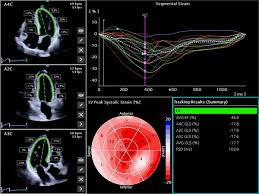
AI pipelines that transform 2D echocardiography data into detailed 3D ventricular models, enabling precise morphological analysis for diagnosing cardiomyopathies, valve disorders, and structural heart disease. Every participant receives a verified e-Certificate and e-Marksheet from the Deep Science & Technology Consortium.
🎯 Program Aim
This course covers AI pipelines that transform 2D echocardiography data into detailed 3D ventricular models, enabling precise morphological analysis for diagnosing cardiomyopathies, valve disorders, and structural heart disease.
📋 Course Objectives
1. Apply biotechnology methods to authentic research and industry problems.
2. Build a defensible project you can showcase to supervisors, reviewers, or employers.
👥 Who Should Enroll?
• Master's and senior undergraduate students specializing in biotechnology
• R&D engineers and working professionals applying biotechnology in industry
• Academics and educators building research or teaching capacity in biotechnology
🚀 Key Learning Outcomes
• Tangible, reproducible biotechnology work to show supervisors or employers.
• A verified e-Certificate of competency and e-Marksheet from the Deep Science & Technology Consortium.
💎 What You'll Gain
Live & Recorded Sessions
Lifetime access to class recordingse-Certificate on Completion
Cryptographically verified credentialPost-Programme Support
Direct access to mentors & councilHands-On Experience
Notebooks, real-world code & datasetsCurriculum Outline
Day 1 – Cardiac Anatomy, 2D Echo Fundamentals & AI Foundations
Explore cardiac anatomy for imaging and the AHA 17‑segment model • Understand ultrasound physics, transducer types and standard echo views • Learn AI basics – supervised learning, CNNs, U‑Net and semantic segmentation • Navigate DICOM echo files with Weasis and inspect metadata using pydicom
Day 2 – AI‑Based Echo Analysis, LV Segmentation & EF Quantification
Build and train a MONAI U‑Net model on the CAMUS dataset • Apply data‑augmentation pipelines specific to echo imaging • Run inference with EchoNet‑Dynamic for ejection‑fraction estimation • Evaluate models using Dice, Hausdorff distance and MAE metrics
Day 3 – 3D Ventricular Reconstruction, Full Pipeline & Career Readiness
Convert 2D masks to 3D geometry using biplane Simpson’s method and voxel stacking • Create 3D LV meshes with 3D Slicer & SlicerHeart, post‑process in MeshLab/ParaView • Assemble an end‑to‑end pipeline (DICOM → preprocessing → MONAI segmentation → VTK rendering → volume report) • Export models to ONNX, deploy a Gradio demo and containerise with Docker
Technical Specifications
| Parameter | Requirement |
|---|---|
| Covered Tool / Platform | Weasis |
| Covered Tool / Platform | pydicom |
| Covered Tool / Platform | OpenCV |
| Covered Tool / Platform | Google Colab |
| Covered Tool / Platform | MONAI |
| Covered Tool / Platform | PyTorch |
| Covered Tool / Platform | Albumentations |
| Covered Tool / Platform | SimpleITK |
| Covered Tool / Platform | Weights & Biases |
| Covered Tool / Platform | D Slicer |
Frequently Asked Questions
Scholar Feedback & Reviews
Based on 0 scholar submissions
Rating Breakdown
No verified reviews published yet. Be the first to share your academic experience.
Leave Scholar Feedback
Your rating will help prospective scholars. Ratings below 3 stars are routed privately to the faculty mentor for immediate response.