Programme Parameters
Advanced Postgrad
3 Days (4.5 Hrs)
Online (e-LMS)
• Prior working knowledge of the field and comfort with core tools and quantitative reasoning.
• A laptop or desktop with a stable internet connection.
• Willingness to complete assignments and the capstone project.
About This Course
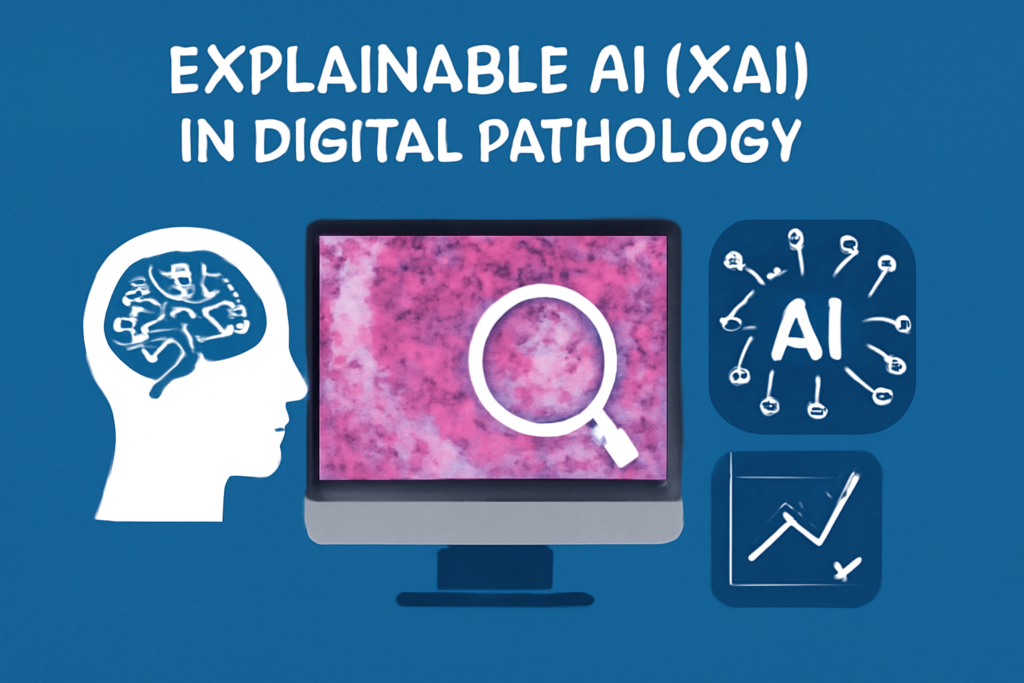
Unlock the power of Explainable AI (XAI) within the critical field of Digital Pathology. This course delves into the methodologies and techniques for building transparent, interpretable, and trustworthy AI models for analyzing pathological images. Every participant receives a verified e-Certificate and e-Marksheet from the Deep Science & Technology Consortium.
🎯 Program Aim
Unlock the power of Explainable AI (XAI) within the critical field of Digital Pathology. This course delves into the methodologies and techniques for building transparent, interpretable, and trustworthy AI models for analyzing pathological images.
📋 Course Objectives
1. Apply biotechnology methods to authentic research and industry problems.
2. Assemble a documented case study that evidences your applied capability.
👥 Who Should Enroll?
• Master's and senior undergraduate students specializing in biotechnology
• R&D engineers and working professionals applying biotechnology in industry
• Academics and educators building research or teaching capacity in biotechnology
🚀 Key Learning Outcomes
• A demonstrable biotechnology project for your research or industry portfolio.
• A verified e-Certificate of competency and e-Marksheet from the Deep Science & Technology Consortium.
💎 What You'll Gain
Live & Recorded Sessions
Lifetime access to class recordingse-Certificate on Completion
Cryptographically verified credentialPost-Programme Support
Direct access to mentors & councilHands-On Experience
Notebooks, real-world code & datasetsCurriculum Outline
Introduction to XAI and Digital Pathology
Define the landscape of AI in Digital Pathology and its challenges. • Understand the fundamental concepts of Explainable AI (XAI). • Explore the ethical and regulatory importance of explainability in healthcare.
Basics of Digital Pathology Image Analysis
Review essential image processing techniques for whole slide images (WSIs). • Identify key features and patterns in pathological specimens. • Prepare datasets for AI model training and evaluation.
Interpretable Machine Learning Models
Examine inherently interpretable models like decision trees and linear models. • Implement and evaluate simple diagnostic models. • Compare their interpretability advantages and limitations.
Post-hoc Explainability Techniques
Apply LIME (Local Interpretable Model-agnostic Explanations) to image data. • Utilize SHAP (SHapley Additive exPlanations) for feature importance. • Generate heatmaps with Grad-CAM and its variants for visual explanations.
Counterfactual Explanations and Adversarial Robustness
Implement counterfactual explanations to understand 'what if' scenarios. • Discuss adversarial attacks and defenses in medical image analysis. • Evaluate the robustness of XAI models in digital pathology.
Best Practices and Future of XAI in Pathology
Develop strategies for integrating XAI into clinical workflows. • Address challenges in validating and deploying explanation systems. • Explore emerging trends and research directions in XAI for healthcare.
Technical Specifications
| Parameter | Requirement |
|---|---|
| Covered Tool / Platform | Python |
| Covered Tool / Platform | TensorFlow |
| Covered Tool / Platform | PyTorch |
| Covered Tool / Platform | OpenCV |
| Covered Tool / Platform | LIME |
| Covered Tool / Platform | SHAP |
| Covered Tool / Platform | Grad-CAM |
Frequently Asked Questions
Scholar Feedback & Reviews
Based on 0 scholar submissions
Rating Breakdown
No verified reviews published yet. Be the first to share your academic experience.
Leave Scholar Feedback
Your rating will help prospective scholars. Ratings below 3 stars are routed privately to the faculty mentor for immediate response.