Programme Parameters
Advanced Postgrad
6 Weeks (60 Hrs)
Online (e-LMS)
• Prior working knowledge of the field and comfort with core tools and quantitative reasoning.
• A laptop or desktop with a stable internet connection.
• Willingness to complete assignments and the capstone project.
About This Course
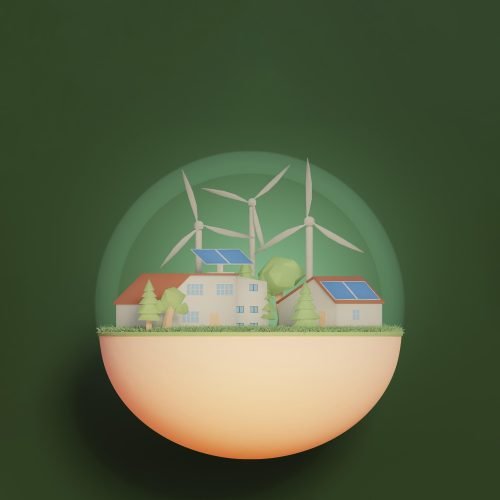
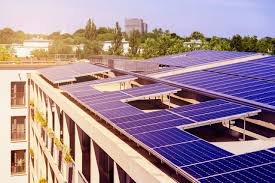
Sustainable Development Through Green Innovations and Renewables surveys the technologies and ideas propelling a sustainable future. You learn the landscape of green innovation — renewable energy, clean technologies, green materials and circular approaches — and how they drive sustainable development across energy, industry and society. The course connects innovation to the goals of decarbonisation and equitable, low-impact growth, and the barriers to adoption. You finish with a grounded view of how green innovation advances sustainable development. A verified e-Certificate of competency and e-Marksheet from the Deep Science & Technology Consortium.
🎯 Program Aim
This course covers sustainable development through green innovations and renewables — how clean technologies and green innovation advance sustainable, low-carbon development.
📋 Course Objectives
1. Survey renewable and clean technologies.
2. Understand green innovation across sectors.
3. Connect innovation to sustainable development.
4. Assess decarbonisation pathways.
5. Identify barriers to green adoption.
👥 Who Should Enroll?
• Sustainability and innovation professionals
• Policy and development staff
• Clean-tech and renewables teams
• Students of sustainable development
🚀 Key Learning Outcomes
• A grounded view of green innovation.
• A sustainable-development perspective.
• A clean-technology foundation.
• A verified e-Certificate of competency and e-Marksheet from the Deep Science & Technology Consortium.
💎 What You'll Gain
Live & Recorded Sessions
Lifetime access to class recordingse-Certificate on Completion
Cryptographically verified credentialPost-Programme Support
Direct access to mentors & councilHands-On Experience
Notebooks, real-world code & datasetsCurriculum Outline
AI Fundamentals, Mathematics, and Sustainable Development Foundations
Apply mathematical concepts to develop sustainable development models using green and renewable energy sources • Analyze the impact of AI on sustainable development and renewable energy systems • Design AI-based solutions to optimize energy efficiency and reduce carbon footprint in various industries
Data Engineering, Preprocessing, and Feature Pipelines
Configure data pipelines to extract insights from large-scale renewable energy datasets • Develop data preprocessing techniques to handle missing values and outliers in sustainable development data • Evaluate the performance of different data engineering approaches for green energy applications
Model Architecture, Algorithm Design, and Sustainable Development Methods
Implement deep learning architectures to predict energy demand and supply in sustainable development scenarios • Design optimization algorithms to improve the efficiency of renewable energy systems • Develop model interpretability techniques to explain AI-driven decisions in sustainable development contexts
Training, Hyperparameter Optimization, and Evaluation
Train AI models using large-scale datasets to predict renewable energy output and optimize sustainable development strategies • Optimize hyperparameters to improve the performance of AI models in green energy applications • Evaluate the robustness of AI models in the presence of uncertainties and variability in sustainable development data
Deployment, MLOps, and Production Workflows
Deploy AI models in production environments to support sustainable development decision-making • Develop MLOps pipelines to monitor and maintain AI models in green energy applications • Configure continuous integration and deployment workflows to ensure seamless model updates and improvements
Ethics, Bias Mitigation, and Responsible AI Practices
Analyze the ethical implications of AI-driven decisions in sustainable development and renewable energy contexts • Develop strategies to mitigate bias in AI models and ensure fairness in sustainable development applications • Evaluate the transparency and explainability of AI models in green energy decision-making processes
Industry Integration, Business Applications, and Case Studies
Apply AI and machine learning techniques to real-world sustainable development and renewable energy challenges • Develop business cases to demonstrate the value of AI-driven sustainable development solutions • Evaluate the feasibility and scalability of AI-based sustainable development projects in various industries
Technical Specifications
| Parameter | Requirement |
|---|---|
| Covered Tool / Platform | Python |
| Covered Tool / Platform | TensorFlow |
| Covered Tool / Platform | PyTorch |
| Covered Tool / Platform | Scikit-learn |
Frequently Asked Questions
Scholar Feedback & Reviews
Based on 0 scholar submissions
Rating Breakdown
No verified reviews published yet. Be the first to share your academic experience.
Leave Scholar Feedback
Your rating will help prospective scholars. Ratings below 3 stars are routed privately to the faculty mentor for immediate response.