Programme Parameters
Graduate / Intermediate
4 Weeks (40 Hrs)
Online (e-LMS)
• A basic understanding of the subject area and fundamental programming or scientific concepts.
• A laptop or desktop with a stable internet connection.
• Willingness to complete assignments and the capstone project.
About This Course
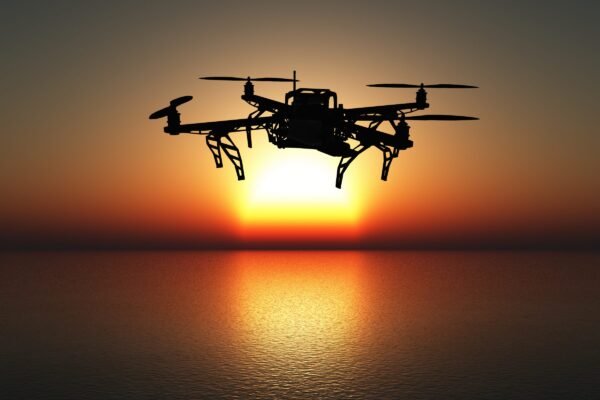
Robotics for Environmental Clean-up Operations explores how autonomous machines take on the dirty, dangerous work of environmental remediation. You learn the robotics fundamentals that matter for these tasks — perception, navigation and manipulation — and how they combine in real systems: aquatic robots collecting plastic and responding to oil spills, ground robots for waste and contaminated sites, and drones for monitoring. The course covers the sensing and autonomy that let robots operate in unstructured, hazardous environments, and the practical constraints of deploying them. You finish able to reason about a robotic solution to an environmental problem. A verified e-Certificate of competency and e-Marksheet from the Deep Science & Technology Consortium.
🎯 Program Aim
This course covers robotics for environmental clean-up — designing and deploying autonomous robots for tasks like waste collection, oil-spill response and hazardous-site remediation.
📋 Course Objectives
1. Explain robot perception, navigation and manipulation.
2. Survey aquatic, ground and aerial clean-up robots.
3. Apply sensing and autonomy in unstructured environments.
4. Match robotic capabilities to clean-up tasks.
5. Assess deployment constraints and safety.
👥 Who Should Enroll?
• Robotics and mechatronics engineers
• Environmental and remediation professionals
• Researchers in field robotics
• Students of robotics and sustainability
🚀 Key Learning Outcomes
• An understanding of environmental clean-up robotics.
• The ability to reason about a robotic solution.
• A foundation in field robotics for sustainability.
• A verified e-Certificate of competency and e-Marksheet from the Deep Science & Technology Consortium.
💎 What You'll Gain
Live & Recorded Sessions
Lifetime access to class recordingse-Certificate on Completion
Cryptographically verified credentialPost-Programme Support
Direct access to mentors & councilHands-On Experience
Notebooks, real-world code & datasetsCurriculum Outline
Foundations of Robotics for Environmental Clean-up and Core Biological Principles
Construct kinematic models for articulated robotic manipulators deployed in aquatic and terrestrial remediation environments • Characterize microbial degradation pathways for petroleum hydrocarbons, heavy metals, and persistent organic pollutants • Evaluate sensor fusion architectures integrating LIDAR, hyperspectral imaging, and electrochemical probes for contaminant detection
Laboratory Techniques, Protocols, and Data Collection
Calibrate dissolved oxygen, pH, and turbidity sensors according to EPA Method 180.1 for in-situ water quality monitoring • Execute aseptic sampling protocols for sediment core extraction and subsequent microbial community analysis • Program autonomous sampling routines on ROV platforms to achieve spatiotemporal resolution targets in dynamic flow conditions
Bioinformatics Tools and Computational Analysis
Assemble metagenomic datasets using MEGAHIT and metaSPAdes to reconstruct contaminant-degrading microbial guilds • Differential abundance analysis of 16S rRNA amplicon data with DESeq2 to identify biomarkers of bioremediation success • Integrate georeferenced sequencing outputs with QGIS to generate predictive pollution hotspot maps for robotic deployment planning
Research Methodology and Experimental Design
Design factorial experiments to optimize robotic dredging parameters (blade angle, velocity, depth) for minimal sediment resuspension • Apply power analysis using G*Power to determine sample sizes for comparative effectiveness studies of robotic vs. conventional clean-up • Construct Bayesian hierarchical models to account for spatial autocorrelation in post-remediation ecological recovery metrics
Advanced Robotics Applications and Translational Research
Deploy swarm algorithms for coordinated autonomous surface vessel networks in large-scale oil spill containment operations • Prototype soft robotic grippers with jamming transition capabilities for delicate coral reef restoration interventions • Validate machine vision pipelines for real-time plastic waste classification and selective retrieval from heterogeneous debris fields
Regulatory Compliance, Bioethics, and Safety Standards
Navigate EPA CERCLA and RCRA frameworks to secure permits for robotic intervention at Superfund-designated sites • Assess liability frameworks for autonomous system decision-making under the ISO/IEC 15026 standard for system safety • Develop stakeholder engagement protocols ensuring Free, Prior, and Informed Consent for clean-up operations in Indigenous territories
Industry Applications, Career Pathways, and Case Studies
Analyze total cost of ownership models comparing ROV-operated vs. diver-based removal of derelict fishing gear • Map career trajectories across environmental consulting firms, government agencies, and autonomous maritime system startups • Deconstruct the Fukushima Daiichi decommissioning robotics program to extract lessons on radiation-hardened system design
Technical Specifications
| Parameter | Requirement |
|---|---|
| Covered Tool / Platform | ROS |
| Covered Tool / Platform | Python |
| Covered Tool / Platform | MATLAB |
| Covered Tool / Platform | QGIS |
| Covered Tool / Platform | MEGAHIT |
| Covered Tool / Platform | DESeq2 |
| Covered Tool / Platform | G*Power |
| Covered Tool / Platform | Docker |
| Covered Tool / Platform | Snakemake |
| Covered Tool / Platform | LIDAR |
Frequently Asked Questions
Scholar Feedback & Reviews
Based on 0 scholar submissions
Rating Breakdown
No verified reviews published yet. Be the first to share your academic experience.
Leave Scholar Feedback
Your rating will help prospective scholars. Ratings below 3 stars are routed privately to the faculty mentor for immediate response.