Programme Parameters
Graduate / Intermediate
3 Days (4.5 Hrs)
Online (e-LMS)
• A basic understanding of the subject area and fundamental programming or scientific concepts.
• A laptop or desktop with a stable internet connection.
• Willingness to complete assignments and the capstone project.
About This Course
Explore cutting-edge techniques in battery performance optimization and degradation analysis through machine learning, and gain hands-on experience in predicting battery lifetime and enhancing reliability in energy storage systems. Every participant receives a verified e-Certificate and e-Marksheet from the Deep Science & Technology Consortium.
🎯 Program Aim
Explore cutting-edge techniques in battery performance optimization and degradation analysis through machine learning, and gain hands-on experience in predicting battery lifetime and enhancing reliability in energy storage systems.
📋 Course Objectives
1. Get comfortable working with machine learning.
2. Apply AI Enablement methods to authentic research and industry problems.
3. Build a defensible project you can showcase to supervisors, reviewers, or employers.
👥 Who Should Enroll?
• Master's and senior undergraduate students specializing in AI Enablement
• R&D engineers and working professionals applying AI Enablement in industry
• Academics and educators building research or teaching capacity in AI Enablement
• Data and computational scientists moving into machine learning
🚀 Key Learning Outcomes
• Confidence to apply machine learning in real projects.
• A demonstrable AI Enablement project for your research or industry portfolio.
• A verified e-Certificate of competency and e-Marksheet from the Deep Science & Technology Consortium.
💎 What You'll Gain
Live & Recorded Sessions
Lifetime access to class recordingse-Certificate on Completion
Cryptographically verified credentialPost-Programme Support
Direct access to mentors & councilHands-On Experience
Notebooks, real-world code & datasetsCurriculum Outline
Degradation Mechanisms
• SEI growth, lithium plating, particle cracking and loss of active material
• Calendar versus cycle ageing and the stress factors driving each
• Distinguishing capacity fade from power fade in measured data
Cycling Data and Feature Extraction
• Public cycling datasets and their protocol differences
• Incremental capacity and differential voltage analysis as features
• Impedance spectroscopy features and practical measurement constraints
State of Health and Remaining Useful Life
• Early-cycle prediction of end-of-life from the first hundred cycles
• Regression and sequence models for capacity trajectory
• Uncertainty quantification, because a point RUL estimate is not actionable
Physics-Informed Approaches
• Equivalent circuit and single-particle models as priors
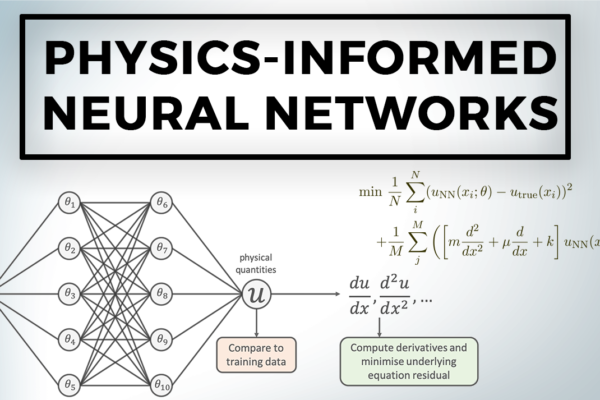
• Physics-informed neural networks and hybrid model structures
• Extrapolating beyond the training envelope without fooling yourself
Battery Management and Second Life
• On-board estimation under BMS compute and memory constraints
• Fleet-level analytics and warranty exposure modelling
• Second-life screening and the safety implications of misclassification
Technical Specifications
| Parameter | Requirement |
|---|---|
| Covered Tool / Platform | Python |
| Covered Tool / Platform | Scikit-learn |
| Covered Tool / Platform | TensorFlow |
| Covered Tool / Platform | Keras |
| Covered Tool / Platform | Pandas |
| Covered Tool / Platform | NumPy |
| Covered Tool / Platform | Matplotlib |
| Covered Tool / Platform | XGBoost |
Frequently Asked Questions
Scholar Feedback & Reviews
Based on 0 scholar submissions
Rating Breakdown
No verified reviews published yet. Be the first to share your academic experience.
Leave Scholar Feedback
Your rating will help prospective scholars. Ratings below 3 stars are routed privately to the faculty mentor for immediate response.