Programme Parameters
Graduate / Intermediate
4 Weeks (40 Hrs)
Online (e-LMS)
• A basic understanding of the subject area and fundamental programming or scientific concepts.
• A laptop or desktop with a stable internet connection.
• Willingness to complete assignments and the capstone project.
About This Course
The LCA for Smart Buildings and Low-Carbon Construction program provides deep technical expertise in evaluating the environmental impact of modern infrastructure. Gain comprehensive skills through our structured curriculum, focusing on decarbonizing the built environment using data-driven life cycle assessment methodologies. Every participant receives a verified e-Certificate and e-Marksheet from the Deep Science & Technology Consortium.
🎯 Program Aim
The LCA for Smart Buildings and Low-Carbon Construction program provides deep technical expertise in evaluating the environmental impact of modern infrastructure. Gain comprehensive skills through our structured curriculum, focusing on decarbonizing the built environment using data-driven life cycle assessment methodologies.
📋 Course Objectives
1. Master the fundamentals of our structured curriculum.
2. Translate AI in Energy & Utilities theory into practical, reproducible analysis.
3. Build a defensible project you can showcase to supervisors, reviewers, or employers.
👥 Who Should Enroll?
• Master's and senior undergraduate students specializing in AI in Energy & Utilities
• R&D engineers and working professionals applying AI in Energy & Utilities in industry
• Academics and educators building research or teaching capacity in AI in Energy & Utilities
• Data and computational scientists moving into our structured curriculum
🚀 Key Learning Outcomes
• Confidence to reason about our structured curriculum in real projects.
• A portfolio-grade AI in Energy & Utilities deliverable you can defend and extend.
• A verified e-Certificate of competency and e-Marksheet from the Deep Science & Technology Consortium.
💎 What You'll Gain
Live & Recorded Sessions
Lifetime access to class recordingse-Certificate on Completion
Cryptographically verified credentialPost-Programme Support
Direct access to mentors & councilHands-On Experience
Notebooks, real-world code & datasetsCurriculum Outline
Module 1 — Foundations of Life Cycle Assessment and Smart Buildings
Introduction to LCA in the built environment • Principles of smart buildings and sustainable infrastructure • Relationship between building performance and carbon footprint • Role of LCA in low-carbon building design
Module 2 — Building Life Cycle Stages and Environmental Impact
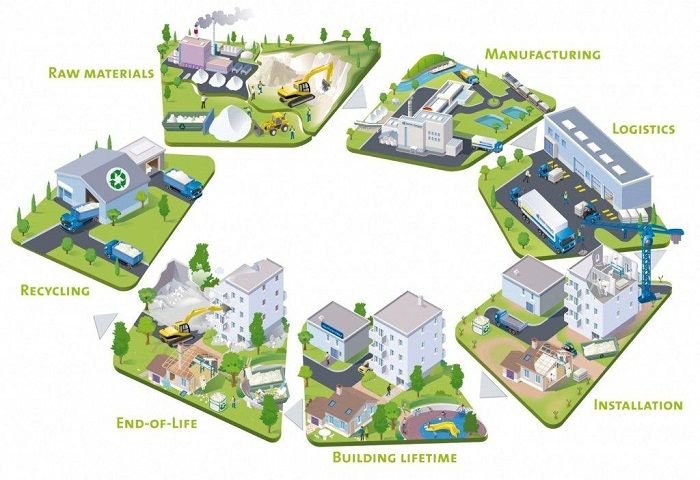
Material production, construction, operation, and end-of-life stages • Embodied carbon vs operational carbon concepts • Environmental impact categories for smart buildings • Scope definition and system boundaries for building LCA
Module 3 — Materials, Resources, and Low-Carbon Construction
Assessment of concrete, steel, timber, and advanced materials • Circular economy principles in building material selection • Resource efficiency and waste minimization strategies
Module 4 — Energy Performance and Smart Building Systems
Energy patterns and Smart HVAC/Lighting automation • Building energy modeling and integration with LCA • Evaluating energy-efficient technologies through a life cycle lens
Module 5 — Carbon Assessment and Low-Emission Design Strategies
Carbon accounting in building operations • Net-zero, passive design, and renewable integration • Comparative assessment of design alternatives
Module 6 — Data, Tools, and Digital Workflows for Building LCA
EPDs, LCA databases, and BIM integration • Digital tools for sustainability and simulation platforms • Data quality, uncertainty, and reproducibility
Module 7 — Standards, Policies, and Green Building Frameworks
International standards and rating systems • Policy drivers for low-carbon construction • Regulatory and reporting considerations
Module 8 — Applied Projects and Case Studies in Smart Low-Carbon Buildings
LCA of residential, commercial, and institutional smart buildings • Comparative case studies: conventional vs low-carbon design • Retrofitting existing buildings for carbon performance • Reproducible project workflows using assessment tools
Tools and Applications Covered
Scholar Feedback & Reviews
Based on 0 scholar submissions
Rating Breakdown
No verified reviews published yet. Be the first to share your academic experience.
Leave Scholar Feedback
Your rating will help prospective scholars. Ratings below 3 stars are routed privately to the faculty mentor for immediate response.