Programme Parameters
Graduate / Intermediate
4 Weeks (40 Hrs)
Online (e-LMS)
• A basic understanding of the subject area and fundamental programming or scientific concepts.
• A laptop or desktop with a stable internet connection.
• Willingness to complete assignments and the capstone project.
About This Course
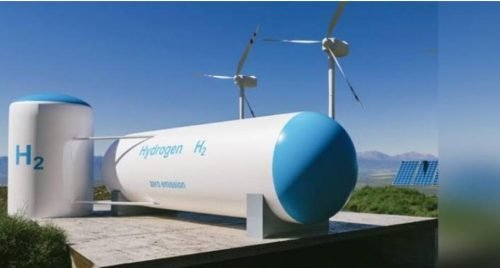
Green Hydrogen Powering Industries Towards Net-Zero Emissions explains one of the most promising pathways to decarbonising hard-to-abate sectors. You learn how green hydrogen is produced by electrolysis from renewables, the challenges of storing and transporting it, and its industrial uses — from steel and ammonia to fuel and power. The course sets green hydrogen within the wider net-zero transition, weighing its promise against cost and infrastructure realities. You finish with a grounded understanding of green hydrogen’s role in industrial decarbonisation. A verified e-Certificate of competency and e-Marksheet from the Deep Science & Technology Consortium.
🎯 Program Aim
This course covers green hydrogen for industry and net-zero — how green hydrogen is produced, stored and used to decarbonise industry and support a net-zero energy system.
📋 Course Objectives
1. Explain green-hydrogen production by electrolysis.
2. Understand storage and transport challenges.
3. Survey industrial uses of hydrogen.
4. Situate hydrogen in the net-zero transition.
5. Weigh cost and infrastructure realities.
👥 Who Should Enroll?
• Energy and industrial professionals
• Sustainability and decarbonisation staff
• Chemical and process engineers
• Students of clean energy
🚀 Key Learning Outcomes
• A grounded understanding of green hydrogen.
• An industrial-decarbonisation perspective.
• A net-zero energy foundation.
• A verified e-Certificate of competency and e-Marksheet from the Deep Science & Technology Consortium.
💎 What You'll Gain
Live & Recorded Sessions
Lifetime access to class recordingse-Certificate on Completion
Cryptographically verified credentialPost-Programme Support
Direct access to mentors & councilHands-On Experience
Notebooks, real-world code & datasetsCurriculum Outline
AI Fundamentals, Mathematics, and Green Hydrogen Foundations
Apply mathematical concepts such as linear algebra and calculus to solve problems in green hydrogen production • Develop a comprehensive understanding of AI fundamentals, including machine learning and deep learning, to analyze energy systems • Design and implement algorithms to optimize green hydrogen production processes, reducing energy consumption and emissions
Data Engineering, Preprocessing, and Feature Pipelines
Configure data pipelines to collect and preprocess large datasets related to green hydrogen production, including sensor data and weather forecasts • Analyze and visualize data to identify trends and patterns in green hydrogen production, informing data-driven decision-making • Implement data quality control measures to ensure accuracy and reliability of data used in green hydrogen production optimization
Model Architecture, Algorithm Design, and Green Hydrogen Methods
Design and implement machine learning models to predict green hydrogen production yields, taking into account factors such as temperature and pressure • Develop and evaluate algorithms to optimize green hydrogen production processes, including electrolysis and fuel cell systems • Integrate domain knowledge of green hydrogen production with AI and machine learning techniques to improve process efficiency and reduce emissions
Training, Hyperparameter Optimization, and Evaluation
Train and evaluate machine learning models using large datasets related to green hydrogen production, optimizing hyperparameters for improved performance • Implement techniques such as cross-validation and walk-forward optimization to ensure robustness and reliability of models • Analyze and interpret results of model evaluations, identifying areas for improvement and informing future model development
Deployment, MLOps, and Production Workflows
Deploy trained models in production environments, integrating with existing green hydrogen production systems and infrastructure • Design and implement MLOps pipelines to streamline model deployment, monitoring, and maintenance • Develop and implement workflows to ensure seamless collaboration between data scientists, engineers, and operators in green hydrogen production environments
Ethics, Bias Mitigation, and Responsible AI Practices
Evaluate and mitigate biases in machine learning models used in green hydrogen production, ensuring fairness and transparency • Develop and implement responsible AI practices, including explainability and interpretability, to ensure trust and accountability • Analyze and address potential ethical concerns related to AI adoption in green hydrogen production, including job displacement and environmental impact
Industry Integration, Business Applications, and Case Studies
Integrate green hydrogen production with existing industry systems and infrastructure, including power grids and transportation networks • Develop and evaluate business cases for green hydrogen production, including cost-benefit analyses and market assessments • Analyze and present case studies of successful green hydrogen production projects, highlighting best practices and lessons learned
Technical Specifications
| Parameter | Requirement |
|---|---|
| Covered Tool / Platform | Python |
| Covered Tool / Platform | TensorFlow |
| Covered Tool / Platform | PyTorch |
| Covered Tool / Platform | Scikit-learn |
Frequently Asked Questions
Scholar Feedback & Reviews
Based on 0 scholar submissions
Rating Breakdown
No verified reviews published yet. Be the first to share your academic experience.
Leave Scholar Feedback
Your rating will help prospective scholars. Ratings below 3 stars are routed privately to the faculty mentor for immediate response.