Programme Parameters
Graduate / Intermediate
4 Weeks (40 Hrs)
Online (e-LMS)
• A basic understanding of the subject area and fundamental programming or scientific concepts.
• A laptop or desktop with a stable internet connection.
• Willingness to complete assignments and the capstone project.
About This Course
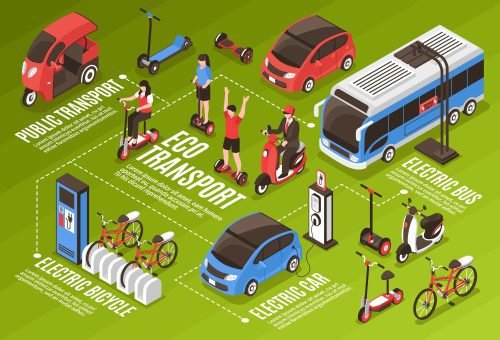
Electric and Autonomous Vehicles for Sustainable Transport looks at two shifts reshaping mobility and their combined potential for sustainability. You learn how electric vehicles work — batteries, powertrains and charging — and how autonomy adds efficiency and new mobility models, then how together they can cut emissions and transform transport systems. The course keeps the focus on the sustainability case and the infrastructure and policy needed to realise it. You finish with a grounded understanding of EVs, AVs and sustainable transport. A verified e-Certificate of competency and e-Marksheet from the Deep Science & Technology Consortium.
🎯 Program Aim
This course covers electric and autonomous vehicles for sustainable transport — the technologies and systems behind cleaner, smarter mobility and their sustainability impact.
📋 Course Objectives
1. Explain EV batteries, powertrains and charging.
2. Understand vehicle autonomy and its benefits.
3. Assess emissions and sustainability impact.
4. Consider charging and mobility infrastructure.
5. Connect technology to sustainable transport.
👥 Who Should Enroll?
• Automotive and transport professionals
• Sustainability and mobility planners
• EV and mobility-tech teams
• Students of sustainable transport
🚀 Key Learning Outcomes
• An understanding of EVs and AVs for sustainability.
• A clean-mobility systems perspective.
• A sustainable-transport foundation.
• A verified e-Certificate of competency and e-Marksheet from the Deep Science & Technology Consortium.
💎 What You'll Gain
Live & Recorded Sessions
Lifetime access to class recordingse-Certificate on Completion
Cryptographically verified credentialPost-Programme Support
Direct access to mentors & councilHands-On Experience
Notebooks, real-world code & datasetsCurriculum Outline
AI Fundamentals, Mathematics, and Foundations
Apply mathematical concepts such as linear algebra and calculus to solve problems in electric and autonomous vehicles • Design and implement AI algorithms using Python and relevant libraries for data analysis and visualization • Evaluate the performance of AI models using metrics such as accuracy, precision, and recall in the context of sustainable transportation
Data Engineering, Preprocessing, and Feature Pipelines
Develop and deploy data pipelines using tools such as Apache Beam and Apache Spark for efficient data processing • Configure and optimize data storage solutions such as relational databases and NoSQL databases for electric and autonomous vehicle data • Analyze and preprocess data using techniques such as data normalization and feature scaling for improved model performance
Model Architecture, Algorithm Design, and Methods
Design and implement deep learning models such as convolutional neural networks and recurrent neural networks for image and signal processing • Develop and evaluate reinforcement learning algorithms for autonomous vehicle control and decision-making • Optimize model architecture using techniques such as hyperparameter tuning and model pruning for improved performance and efficiency
Training, Hyperparameter Optimization, and Evaluation
Train and evaluate machine learning models using techniques such as cross-validation and walk-forward optimization • Implement hyperparameter optimization techniques such as grid search and random search for improved model performance • Evaluate the performance of machine learning models using metrics such as mean squared error and R-squared for regression tasks
Deployment, MLOps, and Production Workflows
Deploy machine learning models using cloud-based platforms such as AWS SageMaker and Google Cloud AI Platform • Develop and implement MLOps workflows using tools such as TensorFlow Extended and MLflow for efficient model deployment • Configure and monitor model performance in production using techniques such as model serving and logging
Ethics, Bias Mitigation, and Responsible AI Practices
Analyze and mitigate bias in machine learning models using techniques such as data preprocessing and model regularization • Develop and implement responsible AI practices such as transparency and explainability for improved model trustworthiness • Evaluate the ethical implications of AI systems using frameworks such as fairness and accountability for improved decision-making
Industry Integration, Business Applications, and Case Studies
Develop and implement AI solutions for industry-specific applications such as autonomous vehicle control and smart infrastructure • Analyze and evaluate the business impact of AI systems using metrics such as return on investment and cost savings • Design and implement AI-powered business models using techniques such as revenue forecasting and market analysis
Technical Specifications
| Parameter | Requirement |
|---|---|
| Covered Tool / Platform | Python |
| Covered Tool / Platform | TensorFlow |
| Covered Tool / Platform | PyTorch |
| Covered Tool / Platform | Apache Spark |
| Covered Tool / Platform | Apache Beam |
Frequently Asked Questions
Scholar Feedback & Reviews
Based on 0 scholar submissions
Rating Breakdown
No verified reviews published yet. Be the first to share your academic experience.
Leave Scholar Feedback
Your rating will help prospective scholars. Ratings below 3 stars are routed privately to the faculty mentor for immediate response.