📚 Syllabus & Course Curriculum
Data Science & Analytics
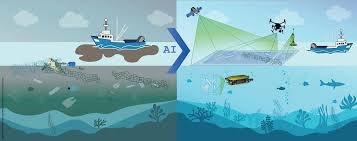
Module-by-module breakdown of AI in Plastic Lifecycle Analysis: Detection, Tracking, and Mitigation, from foundations to a certified capstone project.
Outline
Explore plastic pollutant typologies and environmental impact • Deploy computer‑vision pipelines on Sentinel‑2 and UAV imagery • Build a Python‑based polymer classifier using Raman spectroscopy datasets
Outline
Implement YOLO and CNN models for real‑time debris detection • Apply 3D AI tools (e.g., MP3D) for micro‑plastic volumetric analysis • Validate models against open‑access MDPI research datasets
Outline
Simulate riverine and marine plastic flow with AI‑driven particle tracking • Engineer features linking wind, tide, and current data to drift patterns • Create a Random Forest regression model to predict drift trajectories
Outline
Design RNN and LSTM networks for seasonal pollution prediction • Integrate multi‑source environmental time series (weather, currents) • Evaluate model performance with real‑world historical datasets
Outline
Develop digital twins for waste‑to‑energy and sorting‑facility optimization • Generate predictive risk maps to guide ESG and policy interventions • Prototype data‑driven decision tools for recycling infrastructure
Outline
Integrate detection, transport, and forecasting modules into a single workflow • Deploy the pipeline on Google Colab and generate a policy‑ready impact report • Present findings to peers and receive expert feedback
Earn government-registered certification in AI in Plastic Lifecycle Analysis: Detection, Tracking, and Mitigation
e-Certificate and e-Marksheet issued on successful completion.