Programme Parameters
Advanced Postgrad
3 Days (4.5 Hrs)
Online (e-LMS)
• Prior working knowledge of the field and comfort with core tools and quantitative reasoning.
• A laptop or desktop with a stable internet connection.
• Willingness to complete assignments and the capstone project.
About This Course
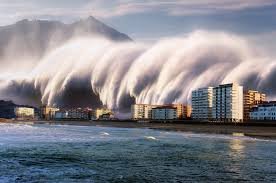
AI for Ocean Currents & Tsunami Early-Warning shows how machine learning strengthens our ability to forecast the ocean and warn of its most dangerous events. You learn to work with oceanographic and seismic data, model ocean currents and dynamics, and build systems that detect tsunami signals early and estimate risk. The course connects these to the life-or-death demands of early-warning systems — speed, reliability and low false-alarm rates. You finish able to reason about an AI approach to ocean forecasting and hazard warning. A verified e-Certificate of competency and e-Marksheet from the Deep Science & Technology Consortium.
🎯 Program Aim
This course applies AI to ocean currents and tsunami early-warning — modelling ocean dynamics and detecting tsunami signals for faster, more reliable warnings.
📋 Course Objectives
1. Work with oceanographic and seismic data.
2. Model ocean currents and dynamics.
3. Detect tsunami signals early.
4. Estimate hazard and risk.
5. Design for warning speed and reliability.
👥 Who Should Enroll?
• Oceanographers and geoscientists
• Disaster-risk and early-warning professionals
• Environmental data scientists
• Students of ocean and hazard science
🚀 Key Learning Outcomes
• An understanding of AI in ocean forecasting.
• A hazard early-warning perspective.
• An ocean-data project.
• A verified e-Certificate of competency and e-Marksheet from the Deep Science & Technology Consortium.
💎 What You'll Gain
Live & Recorded Sessions
Lifetime access to class recordingse-Certificate on Completion
Cryptographically verified credentialPost-Programme Support
Direct access to mentors & councilHands-On Experience
Notebooks, real-world code & datasetsCurriculum Outline
Ocean Data & Physics Fundamentals for AI
Explore various ocean observations: Buoys/DART, HF radar, and satellite altimetry (SSH). • Understand data formats (NetCDF/Zarr), coordinates, and gridding for coastal domains. • Grasp physical basics of shallow-water intuition, bathymetry, and boundaries. • Compare ML landscape: baselines (persistence/AR) vs. advanced models like PINNs and Neural Operators (FNO).
Advanced Forecasting and Data Assimilation
Examine the essentials of Data Assimilation: EnKF/3D-Var intuition, analysis increments, and observation error. • Implement sequence models for marine time series data, including encoder–decoder transformers and SSMs, addressing masking and missing data. • Learn uncertainty and calibration techniques: ensembles, heteroscedastic outputs, and conformal prediction; assess coverage and CRPS. • Assimilate an HF-radar snapshot into yesterday’s state and visualize the resulting analysis increments.
Tsunami Early Warning and Operational Pipelines
Detect tsunami signals from DART/Tide Gauges: detrending, anomaly scoring, and ensuring robustness to noise/clock drift. • Estimate Tsunami ETA and communicate warnings effectively, including uncertainty bands and practical reporting. • Design alert mechanisms considering precision–recall vs. ROC, class imbalance, cost–loss analysis, and tiering (Advisory/Watch/Warning). • Detect tsunami-like anomalies and accurately estimate ETA with uncertainty bands.
Technical Specifications
| Parameter | Requirement |
|---|---|
| Covered Tool / Platform | Python |
| Covered Tool / Platform | NetCDF |
| Covered Tool / Platform | Zarr |
| Covered Tool / Platform | PINNs |
| Covered Tool / Platform | FNOs |
| Covered Tool / Platform | Encoder-Decoders |
| Covered Tool / Platform | EnKF/3D-Var |
| Covered Tool / Platform | Conformal Prediction |
Frequently Asked Questions
Scholar Feedback & Reviews
Based on 0 scholar submissions
Rating Breakdown
No verified reviews published yet. Be the first to share your academic experience.
Leave Scholar Feedback
Your rating will help prospective scholars. Ratings below 3 stars are routed privately to the faculty mentor for immediate response.