Programme Parameters
Graduate / Intermediate
4 Weeks (40 Hrs)
Online (e-LMS)
• A basic understanding of the subject area and fundamental programming or scientific concepts.
• A laptop or desktop with a stable internet connection.
• Willingness to complete assignments and the capstone project.
About This Course
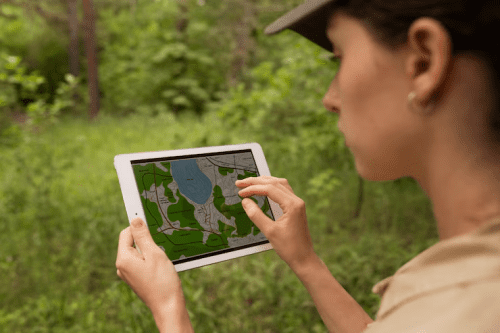
Augmented Reality (AR) is transforming how environmental education is delivered by making learning more engaging and interactive. This program introduces participants to the use of AR in environmental education, highlighting how immersive technology can visualize complex ecological systems, environmental changes, and sustainability issues in a user-friendly and impactful manner. Every participant receives a verified e-Certificate and e-Marksheet from the Deep Science & Technology Consortium.
🎯 Program Aim
Augmented Reality (AR) is transforming how environmental education is delivered by making learning more engaging and interactive. This program introduces participants to the use of AR in environmental education, highlighting how immersive technology can visualize complex ecological systems, environmental changes, and sustainability issues in a user-friendly and impactful manner.
📋 Course Objectives
1. Translate biotechnology theory into practical, reproducible analysis.
2. Assemble a documented case study that evidences your applied capability.
👥 Who Should Enroll?
• Master's and senior undergraduate students specializing in biotechnology
• R&D engineers and working professionals applying biotechnology in industry
• Academics and educators building research or teaching capacity in biotechnology
🚀 Key Learning Outcomes
• A portfolio-grade biotechnology deliverable you can defend and extend.
• A verified e-Certificate of competency and e-Marksheet from the Deep Science & Technology Consortium.
💎 What You'll Gain
Live & Recorded Sessions
Lifetime access to class recordingse-Certificate on Completion
Cryptographically verified credentialPost-Programme Support
Direct access to mentors & councilHands-On Experience
Notebooks, real-world code & datasetsCurriculum Outline
Introduction to AR in Environmental Education
Fundamentals of Augmented Reality (AR): Definition, history, and capabilities. • Overview of AR's impact on education and environmental awareness. • Examples of AR-driven initiatives for climate and sustainability education. • Exploring existing AR applications in environmental learning.
Designing AR Experiences for Environmental Learning
Tools and platforms for AR development: Unity, Spark AR, and others. • Strategies for crafting engaging and interactive AR content. • Creating AR content for topics such as biodiversity, pollution, and renewable energy. • Designing a simple AR experience for an environmental topic.
Using AR for Conservation and Sustainability Campaigns
Case studies: Successful AR campaigns in conservation and climate action. • Best practices for integrating AR into public awareness initiatives. • Designing AR-based campaigns for waste reduction, reforestation, and wildlife conservation. • Developing a concept for an AR-driven sustainability campaign.
Practical Course and Ethical Considerations
Using AR tools to create interactive environmental experiences. • Testing and refining AR projects for impact and usability. • Ethical considerations: Addressing privacy, accessibility, and potential biases in AR education. • Develop and showcase an AR experience for environmental education.
Technical Specifications
| Parameter | Requirement |
|---|---|
| Covered Tool / Platform | SimaPro |
| Covered Tool / Platform | GaBi |
| Covered Tool / Platform | Python |
| Covered Tool / Platform | HOMER Pro |
| Covered Tool / Platform | EnergyPlus |
| Covered Tool / Platform | LCA Tools |
| Covered Tool / Platform | GIS |
Frequently Asked Questions
Scholar Feedback & Reviews
Based on 0 scholar submissions
Rating Breakdown
No verified reviews published yet. Be the first to share your academic experience.
Leave Scholar Feedback
Your rating will help prospective scholars. Ratings below 3 stars are routed privately to the faculty mentor for immediate response.