Programme Parameters
Advanced Postgrad
4 Weeks (40 Hrs)
Online (e-LMS)
• Prior working knowledge of the field and comfort with core tools and quantitative reasoning.
• A laptop or desktop with a stable internet connection.
• Willingness to complete assignments and the capstone project.
About This Course
Drug Designing: Traditional and In Silico program offer a comprehensive exploration of the multifaceted process of drug discovery and development. These program blend traditional methods of drug design, involving chemical synthesis and experimental testing, with state-of-the-art computational approaches. Students delve into fundamental concepts of medicinal chemistry, pharmacology, and molecular biology, gaining insight into the principles governing drug-target interactions and structure-activity relationships. Every participant receives a verified e-Certificate and e-Marksheet from the Deep Science & Technology Consortium.
🎯 Program Aim
Drug Designing: Traditional and In Silico program offer a comprehensive exploration of the multifaceted process of drug discovery and development. These program blend traditional methods of drug design, involving chemical synthesis and experimental testing, with state-of-the-art computational approaches. Students delve into fundamental concepts of medicinal chemistry, pharmacology, and molecular biology, gaining insight into the principles governing drug-target interactions and structure-activity relationships.
📋 Course Objectives
1. Put biotechnology techniques to work on real datasets and case studies.
2. Assemble a documented case study that evidences your applied capability.
👥 Who Should Enroll?
• Master's and senior undergraduate students specializing in biotechnology
• R&D engineers and working professionals applying biotechnology in industry
• Academics and educators building research or teaching capacity in biotechnology
🚀 Key Learning Outcomes
• Tangible, reproducible biotechnology work to show supervisors or employers.
• A verified e-Certificate of competency and e-Marksheet from the Deep Science & Technology Consortium.
💎 What You'll Gain
Live & Recorded Sessions
Lifetime access to class recordingse-Certificate on Completion
Cryptographically verified credentialPost-Programme Support
Direct access to mentors & councilHands-On Experience
Notebooks, real-world code & datasetsCurriculum Outline
Foundations of Rational Design
• Structure-activity relationships and bioisosteric replacement
• Lipinski and beyond: property-based design and ligand efficiency metrics
• Hit, lead and candidate stages and the decisions at each gate
Target Structure and Docking
• Target preparation, protonation states and binding-site definition
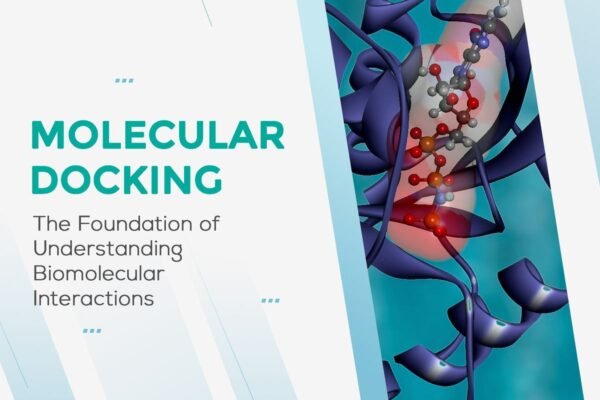
• Molecular docking, scoring function limitations and pose plausibility
• Structure-based optimisation guided by interaction analysis
When No Structure Is Available
• Pharmacophore modelling and shape-based screening
• QSAR with a defined applicability domain
• Similarity searching and scaffold hopping
Simulation and Binding Energetics
• Molecular dynamics for stability and induced fit
• Binding free energy estimation and its cost-accuracy trade-off
• Interpreting simulation results without overclaiming
Developability and Attrition
• ADMET prediction and the endpoints where models remain unreliable
• Toxicity alerts, off-target liabilities and hERG risk
• Why compounds fail late, and what earlier analysis could have caught
Technical Specifications
| Parameter | Requirement |
|---|---|
| Covered Tool / Platform | AutoDock Vina |
| Covered Tool / Platform | PyRx |
| Covered Tool / Platform | Schrödinger Suite |
| Covered Tool / Platform | GROMACS |
| Covered Tool / Platform | ChemDraw |
| Covered Tool / Platform | Discovery Studio |
| Covered Tool / Platform | ADMET Predictor |
Frequently Asked Questions
Scholar Feedback & Reviews
Based on 0 scholar submissions
Rating Breakdown
No verified reviews published yet. Be the first to share your academic experience.
Leave Scholar Feedback
Your rating will help prospective scholars. Ratings below 3 stars are routed privately to the faculty mentor for immediate response.