Programme Parameters
Graduate / Intermediate
4 Weeks (40 Hrs)
Online (e-LMS)
• A basic understanding of the subject area and fundamental programming or scientific concepts.
• A laptop or desktop with a stable internet connection.
• Willingness to complete assignments and the capstone project.
About This Course
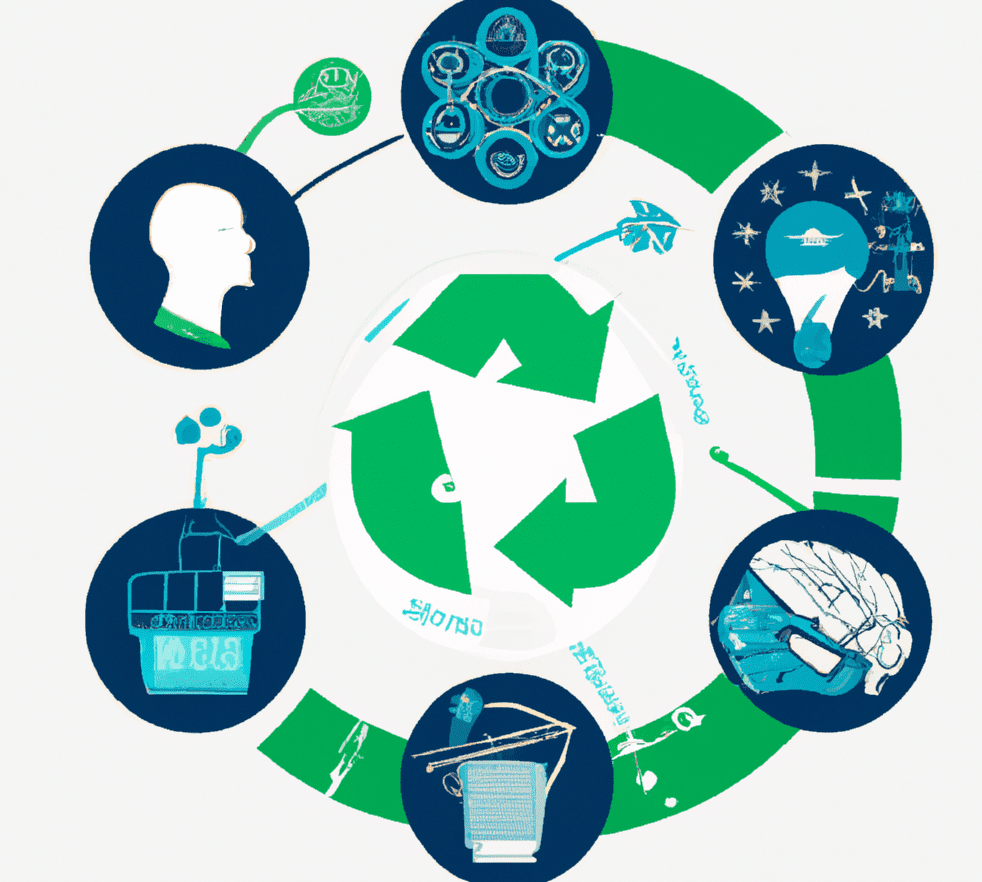
AI-Assisted Circular Economy Pathways explores how data and machine learning help move economies from linear take-make-waste toward circular systems. You learn to model and optimise material flows, identify opportunities for reuse, recycling and waste valorisation, and support product-lifecycle and design decisions that keep materials in use. The course connects analytical methods — material-flow analysis, optimisation and predictive modelling — to real circular-economy strategies in industry and policy. You finish able to apply AI to a circularity problem, from material flow to design decision. A verified e-Certificate of competency and e-Marksheet from the Deep Science & Technology Consortium.
🎯 Program Aim
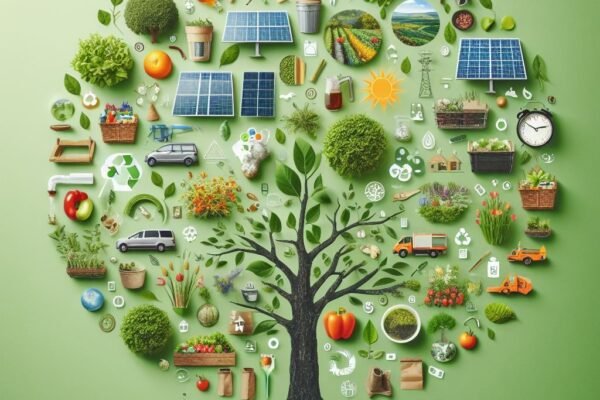
This course applies AI to the circular economy — optimising material flows, waste valorisation, recycling and product-lifecycle strategies for sustainability.
📋 Course Objectives
1. Model and analyse material and waste flows.
2. Identify reuse, recycling and valorisation opportunities.
3. Optimise circular material and product strategies.
4. Support lifecycle and eco-design decisions.
5. Connect analysis to industry and policy action.
👥 Who Should Enroll?
• Sustainability and circular-economy professionals
• Industrial-ecology and operations analysts
• Data scientists in sustainability
• Students of environmental systems
🚀 Key Learning Outcomes
• The ability to apply AI to circular-economy problems.
• A material-flow or circularity project.
• A sustainability-focused analytical approach.
• A verified e-Certificate of competency and e-Marksheet from the Deep Science & Technology Consortium.
💎 What You'll Gain
Live & Recorded Sessions
Lifetime access to class recordingse-Certificate on Completion
Cryptographically verified credentialPost-Programme Support
Direct access to mentors & councilHands-On Experience
Notebooks, real-world code & datasetsCurriculum Outline
AI Fundamentals, Mathematics, and Foundations
Develop a comprehensive understanding of linear algebra and calculus for AI applications • Analyze the fundamentals of probability and statistics for machine learning • Configure computational frameworks for efficient AI model development
Data Engineering, Preprocessing, and Feature Pipelines
Design data pipelines for efficient data ingestion and processing • Implement data preprocessing techniques for handling missing values and outliers • Evaluate feature engineering methods for improving model performance
Model Architecture, Algorithm Design, and Methods
Implement convolutional neural networks for image classification tasks • Analyze the performance of recurrent neural networks for sequence prediction • Develop transfer learning techniques for adapting pre-trained models to new tasks
Training, Hyperparameter Optimization, and Evaluation
Configure hyperparameter tuning methods for optimal model performance • Evaluate model performance using metrics such as accuracy and F1-score • Develop strategies for handling overfitting and underfitting in AI models
Deployment, MLOps, and Production Workflows
Design containerization strategies for deploying AI models • Implement continuous integration and continuous deployment (CI/CD) pipelines • Develop monitoring and logging strategies for production AI workflows
Ethics, Bias Mitigation, and Responsible AI Practices
Analyze the impact of bias in AI decision-making systems • Develop strategies for mitigating bias in AI models • Evaluate the importance of transparency and explainability in AI systems
Industry Integration, Business Applications, and Case Studies
Develop business cases for AI adoption in various industries • Implement AI solutions for real-world problems in industries such as healthcare and finance • Evaluate the return on investment (ROI) of AI solutions in different industries
Technical Specifications
| Parameter | Requirement |
|---|---|
| Covered Tool / Platform | Python |
| Covered Tool / Platform | TensorFlow |
| Covered Tool / Platform | PyTorch |
Programme Faculty & Mentors

Frequently Asked Questions
Scholar Feedback & Reviews
Based on 0 scholar submissions
Rating Breakdown
No verified reviews published yet. Be the first to share your academic experience.
Leave Scholar Feedback
Your rating will help prospective scholars. Ratings below 3 stars are routed privately to the faculty mentor for immediate response.