Programme Parameters
Graduate / Intermediate
4 Weeks (40 Hrs)
Online (e-LMS)
• A basic understanding of the subject area and fundamental programming or scientific concepts.
• A laptop or desktop with a stable internet connection.
• Willingness to complete assignments and the capstone project.
About This Course
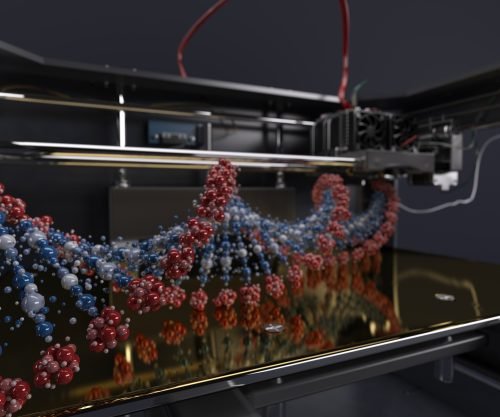
Bioprinting: From Tissues to Organs explores one of the boldest frontiers in biomedicine — fabricating living tissue layer by layer. You study the building blocks: bioinks and biomaterials, the major printing technologies (extrusion, inkjet and laser-assisted), and the cell biology that decides whether printed constructs survive and function. The course traces the tissue-engineering journey from simple scaffolds to vascularised tissues and the grand challenge of printable organs, alongside the practical and ethical hurdles of getting there. You finish able to reason critically about bioprinting approaches and their feasibility. A verified e-Certificate of competency and e-Marksheet from the Deep Science & Technology Consortium.
🎯 Program Aim
This course covers 3D bioprinting — bioinks, printing technologies, cell biology and the tissue-engineering path from simple constructs toward functional organs.
📋 Course Objectives
1. Compare bioink materials and their requirements.
2. Explain extrusion, inkjet and laser-assisted bioprinting.
3. Relate cell biology to construct viability and function.
4. Trace tissue engineering from scaffolds toward organs.
5. Assess the technical and ethical challenges of bioprinting.
👥 Who Should Enroll?
• Biomedical and tissue-engineering researchers
• Bioprinting and biomaterials professionals
• PhD scholars in regenerative medicine
• Students exploring 3D bioprinting
🚀 Key Learning Outcomes
• A critical understanding of bioprinting technologies.
• The ability to evaluate a bioprinting approach.
• A foundation for tissue-engineering research.
• A verified e-Certificate of competency and e-Marksheet from the Deep Science & Technology Consortium.
💎 What You'll Gain
Live & Recorded Sessions
Lifetime access to class recordingse-Certificate on Completion
Cryptographically verified credentialPost-Programme Support
Direct access to mentors & councilHands-On Experience
Notebooks, real-world code & datasetsCurriculum Outline
Foundations of Bioprinting
Analyze the fundamental principles of bioprinting, including cell biology, biomaterials, and 3D printing technologies • Develop a comprehensive understanding of the core biological principles underlying tissue and organ development • Evaluate the current state of bioprinting research and its potential applications in regenerative medicine
Laboratory Techniques, Protocols, and Data Collection
Configure and operate bioprinting equipment, including 3D printers and bioreactors • Design and implement laboratory protocols for cell culture, tissue engineering, and bioprinting experiments • Collect and analyze data from bioprinting experiments, including imaging, spectroscopy, and mechanical testing
Bioinformatics Tools and Computational Analysis
Apply bioinformatics tools and algorithms to analyze genomic and transcriptomic data from bioprinted tissues • Develop computational models to simulate bioprinting processes and predict tissue behavior • Integrate data from multiple sources, including imaging, sequencing, and mechanical testing, to gain insights into bioprinted tissue structure and function
Research Methodology and Experimental Design
Design and conduct experiments to test hypotheses in bioprinting research, including statistical analysis and data interpretation • Develop and implement robust experimental protocols to ensure reproducibility and validity • Evaluate the ethical implications of bioprinting research and ensure compliance with regulatory standards
Advanced Bioprinting Applications and Translational Research
Investigate the applications of bioprinting in translational research, including tissue engineering, regenerative medicine, and personalized healthcare • Develop strategies for scaling up bioprinting processes for clinical and industrial applications • Collaborate with clinicians and industry partners to develop bioprinting solutions for real-world problems
Regulatory Compliance, Bioethics, and Safety Standards
Evaluate the regulatory framework governing bioprinting research and development, including FDA and EU guidelines • Develop and implement bioethics guidelines for bioprinting research, including informed consent and patient privacy • Ensure compliance with safety standards and protocols for handling biomaterials, cells, and bioprinting equipment
Industry Applications, Career Pathways, and Case Studies
Investigate the current state of bioprinting in industry, including applications in pharmaceuticals, cosmetics, and medical devices • Develop a comprehensive understanding of career pathways in bioprinting, including research, development, and regulatory affairs • Analyze case studies of successful bioprinting companies and research institutions, including their strategies and challenges
Technical Specifications
| Parameter | Requirement |
|---|---|
| Covered Tool / Platform | Python |
| Covered Tool / Platform | MATLAB |
| Covered Tool / Platform | D printing software |
| Covered Tool / Platform | bioreactors |
Frequently Asked Questions
Scholar Feedback & Reviews
Based on 0 scholar submissions
Rating Breakdown
No verified reviews published yet. Be the first to share your academic experience.
Leave Scholar Feedback
Your rating will help prospective scholars. Ratings below 3 stars are routed privately to the faculty mentor for immediate response.