Programme Parameters
Advanced Postgrad
6 Weeks (60 Hrs)
Online (e-LMS)
• Prior working knowledge of the field and comfort with core tools and quantitative reasoning.
• A laptop or desktop with a stable internet connection.
• Willingness to complete assignments and the capstone project.
About This Course
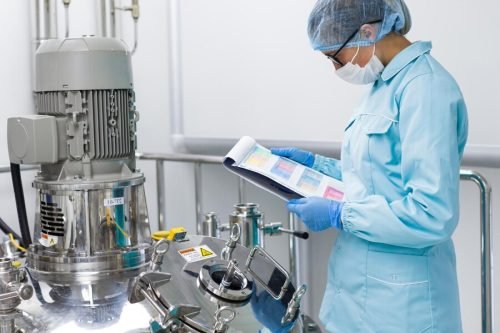
The Advanced Bioprocess Engineering Course is an advanced professional program designed to provide learners with in-depth knowledge of modern bioprocess development, optimization, scale-up, and industrial biomanufacturing. The course focuses on the engineering principles used to design, control, and improve biological production systems for pharmaceuticals, enzymes, vaccines, biofuels, food biotechnology, biomaterials, and industrial biotechnology applications. Every participant receives a verified e-Certificate and e-Marksheet from the Deep Science & Technology Consortium.
🎯 Program Aim
The Advanced Bioprocess Engineering Course is an advanced professional program designed to provide learners with in-depth knowledge of modern bioprocess development, optimization, scale-up, and industrial biomanufacturing. The course focuses on the engineering principles used to design, control, and improve biological production systems for pharmaceuticals, enzymes, vaccines, biofuels, food biotechnology, biomaterials, and industrial biotechnology applications.
📋 Course Objectives
1. Apply bioinformatics methods to authentic research and industry problems.
2. Build a defensible project you can showcase to supervisors, reviewers, or employers.
👥 Who Should Enroll?
• Master's and senior undergraduate students specializing in bioinformatics
• R&D engineers and working professionals applying bioinformatics in industry
• Academics and educators building research or teaching capacity in bioinformatics
🚀 Key Learning Outcomes
• Tangible, reproducible bioinformatics work to show supervisors or employers.
• A verified e-Certificate of competency and e-Marksheet from the Deep Science & Technology Consortium.
💎 What You'll Gain
Live & Recorded Sessions
Lifetime access to class recordingse-Certificate on Completion
Cryptographically verified credentialPost-Programme Support
Direct access to mentors & councilHands-On Experience
Notebooks, real-world code & datasetsCurriculum Outline
Introduction to Advanced Bioprocess Engineering
Overview of Bioprocess Engineering and Industrial Biotechnology • Role of Bioprocessing in Pharmaceuticals, Food, Biofuels, and Biomanufacturing • Key Concepts in Biological Production Systems • Current Trends in Advanced Bioprocessing and Sustainable Manufacturing
Microbial and Cell Culture Systems
Microbial Cell Cultivation for Industrial Bioprocesses • Mammalian, Plant, and Insect Cell Culture Applications • Growth Kinetics and Nutrient Requirements • Selection of Production Strains and Host Systems
Bioprocess Design and Development
Principles of Bioprocess Design • Media Design, Process Parameters, and Yield Optimization • Batch, Fed-Batch, and Continuous Processing Strategies • Process Development from Laboratory Scale to Pilot Scale
Fermentation Technology and Bioreactor Engineering
Fundamentals of Fermentation Processes • Bioreactor Design, Operation, and Configuration • Aeration, Agitation, Mixing, and Mass Transfer • Scale-Up Challenges in Fermentation and Cell Culture Systems
Advanced Bioprocessing and Process Optimization
Process Intensification in Modern Bioprocessing • Optimization of Productivity, Yield, and Product Quality • Design of Experiments for Bioprocess Improvement • Data-Driven Approaches for Monitoring and Process Control
Downstream Processing and Product Recovery
Principles of Downstream Processing • Cell Separation, Filtration, Centrifugation, and Clarification • Chromatography, Purification, and Concentration Techniques • Product Recovery for Biopharmaceuticals, Enzymes, and Industrial Bioproducts
Biomanufacturing and Industrial Production Systems
Introduction to Biomanufacturing Facilities and Workflows • Good Manufacturing Practices and Quality Systems • Process Validation, Documentation, and Batch Records • Industrial Production of Biologics, Vaccines, Enzymes, and Bio-Based Products
Biofuels Production and Sustainable Bioprocessing
Bioprocess Engineering for Bioethanol, Biodiesel, Biogas, and Advanced Biofuels • Feedstock Selection, Pretreatment, and Conversion Technologies • Microbial and Enzymatic Routes for Biofuels Production • Sustainability, Waste Valorization, and Circular Bioeconomy Applications
Process Monitoring, Control, and Automation
Key Process Variables in Bioprocess Operations • Sensors, Online Monitoring, and Process Analytical Technologies • Automation in Bioreactor and Fermentation Systems • Quality-by-Design and Real-Time Process Control
Scale-Up, Tech Transfer, and Commercialization
Scale-Up Principles for Bioprocess Engineering • Pilot Plant Operations and Industrial Translation • Technology Transfer from R&D to Manufacturing • Economic Feasibility, Cost Analysis, and Commercial Readiness
Regulatory, Safety, and Quality Considerations
Biosafety and Risk Management in Bioprocess Facilities • Regulatory Requirements for Biomanufacturing • Quality Control and Quality Assurance in Bioprocessing • Environmental and Ethical Considerations in Industrial Biotechnology
Capstone Project and Case-Based Bioprocess Implementation
Designing a Complete Bioprocess Workflow • Bioreactor Selection and Process Optimization Exercise • Downstream Processing and Product Recovery Planning • Final Case Study on Industrial Bioprocess Design and Scale-Up
Technical Specifications
| Parameter | Requirement |
|---|---|
| Covered Tool / Platform | Advanced Bioprocessing |
| Covered Tool / Platform | Biofuels Production |
| Covered Tool / Platform | Biomanufacturing |
| Covered Tool / Platform | Bioprocess Design |
| Covered Tool / Platform | Bioprocess Engineering |
| Covered Tool / Platform | Fermentation Technology |
| Covered Tool / Platform | Bioreactor Engineering |
| Covered Tool / Platform | Microbial Cell Culture |
| Covered Tool / Platform | Mammalian Cell Culture |
| Covered Tool / Platform | Upstream Processing |
| Covered Tool / Platform | Downstream Processing |
| Covered Tool / Platform | Process Optimization |
| Covered Tool / Platform | Process Analytical Technology |
| Covered Tool / Platform | Quality-by-Design |
| Covered Tool / Platform | Scale-Up and Technology Transfer |
| Covered Tool / Platform | Good Manufacturing Practices |
Frequently Asked Questions
Scholar Feedback & Reviews
Based on 0 scholar submissions
Rating Breakdown
No verified reviews published yet. Be the first to share your academic experience.
Leave Scholar Feedback
Your rating will help prospective scholars. Ratings below 3 stars are routed privately to the faculty mentor for immediate response.