Programme Parameters
Graduate / Intermediate
4 Weeks (40 Hrs)
Online (e-LMS)
• A basic understanding of the subject area and fundamental programming or scientific concepts.
• A laptop or desktop with a stable internet connection.
• Willingness to complete assignments and the capstone project.
About This Course
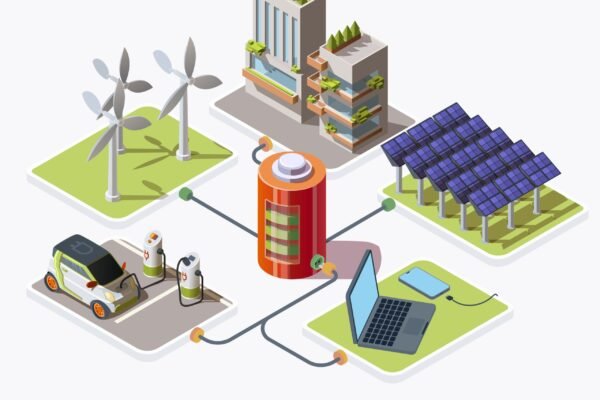
Overview of the renewable energy sector: The program provides an overview of the current state of the renewable energy sector, including trends, challenges, and opportunities. 2. Entrepreneurship and business development: Participants learn about the fundamentals of entrepreneurship, including identifying market opportunities, developing business plans, and securing funding. 3. Renewable energy technologies: The program covers various renewable energy technologies, including solar, wind, hydro, geothermal, and biomass energy. Every participant receives a verified e-Certificate and e-Marksheet from the Deep Science & Technology Consortium.
🎯 Program Aim
1. Overview of the renewable energy sector: The program provides an overview of the current state of the renewable energy sector, including trends, challenges, and opportunities. 2. Entrepreneurship and business development: Participants learn about the fundamentals of entrepreneurship, including identifying market opportunities, developing business plans, and securing funding. 3. Renewable energy technologies: The program covers various renewable energy technologies, including solar, wind, hydro, geothermal, and biomass energy.
📋 Course Objectives
1. Translate biotechnology theory into practical, reproducible analysis.
2. Assemble a documented case study that evidences your applied capability.
👥 Who Should Enroll?
• Master's and senior undergraduate students specializing in biotechnology
• R&D engineers and working professionals applying biotechnology in industry
• Academics and educators building research or teaching capacity in biotechnology
🚀 Key Learning Outcomes
• A demonstrable biotechnology project for your research or industry portfolio.
• A verified e-Certificate of competency and e-Marksheet from the Deep Science & Technology Consortium.
💎 What You'll Gain
Live & Recorded Sessions
Lifetime access to class recordingse-Certificate on Completion
Cryptographically verified credentialPost-Programme Support
Direct access to mentors & councilHands-On Experience
Notebooks, real-world code & datasetsCurriculum Outline
Where the Opportunities Are
• Solar, wind, hydro, geothermal and biomass and their differing maturity
• Falling capex curves and what that does to a business plan written last year
• India's policy environment: national targets, PM-KUSUM and ALMM implications
Making the Numbers Work
• LCOE and its assumptions on discount rate, capacity factor and lifetime
• Capex against opex profiles and where the margin actually sits
• Intermittency, curtailment and storage cost as the constraint on many models
Structuring the Business
• RESCO, EPC, O&M and energy-as-a-service models compared
• Power purchase agreements, net metering and open access rules
• Customer segments and the sales cycle length each implies
Funding a Project
• Project finance, debt-equity structuring and DSCR expectations
• Grants, subsidies, accelerated depreciation and carbon credit revenue
• Investor diligence and the technical risk that kills a term sheet
Building the Venture
• Permits, interconnection approvals and land as the usual schedule risk
• Supply chain, quality standards and the cost of a cheap component
• Pilot, unit economics and the conditions for scaling
Technical Specifications
| Parameter | Requirement |
|---|---|
| Covered Tool / Platform | SimaPro |
| Covered Tool / Platform | GaBi |
| Covered Tool / Platform | Python |
| Covered Tool / Platform | HOMER Pro |
| Covered Tool / Platform | EnergyPlus |
| Covered Tool / Platform | LCA Tools |
| Covered Tool / Platform | GIS |
Frequently Asked Questions
Scholar Feedback & Reviews
Based on 0 scholar submissions
Rating Breakdown
No verified reviews published yet. Be the first to share your academic experience.
Leave Scholar Feedback
Your rating will help prospective scholars. Ratings below 3 stars are routed privately to the faculty mentor for immediate response.