Programme Parameters
Advanced Postgrad
4 Days (6 Hrs)
Online (e-LMS)
• Prior working knowledge of the field and comfort with core tools and quantitative reasoning.
• A laptop or desktop with a stable internet connection.
• Willingness to complete assignments and the capstone project.
About This Course
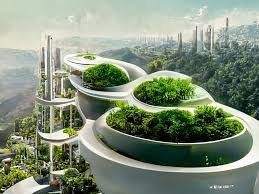
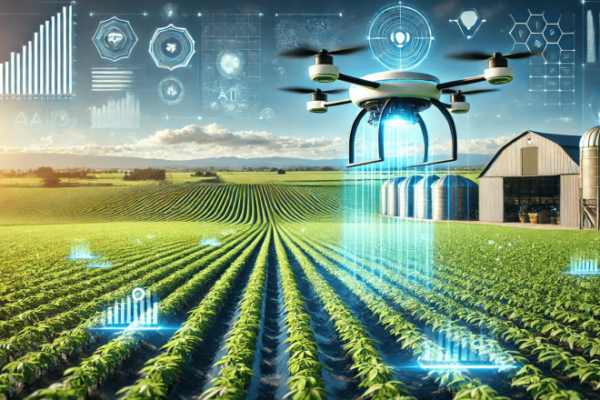
This 4-day hands-on course teaches participants to combine biodesign (biomimicry, living facades, green roofs, bio-based materials) with AI-driven building and city analytics to improve comfort, reduce energy use, and cut emissions. Every participant receives a verified e-Certificate and e-Marksheet from the Deep Science & Technology Consortium.
🎯 Program Aim
This 4-day hands-on course teaches participants to combine biodesign (biomimicry, living facades, green roofs, bio-based materials) with AI-driven building and city analytics to improve comfort, reduce energy use, and cut emissions.
📋 Course Objectives
1. Put AI in Sustainability & Climate techniques to work on real datasets and case studies.
2. Assemble a documented case study that evidences your applied capability.
👥 Who Should Enroll?
• Master's and senior undergraduate students specializing in AI in Sustainability & Climate
• R&D engineers and working professionals applying AI in Sustainability & Climate in industry
• Academics and educators building research or teaching capacity in AI in Sustainability & Climate
🚀 Key Learning Outcomes
• Tangible, reproducible AI in Sustainability & Climate work to show supervisors or employers.
• A verified e-Certificate of competency and e-Marksheet from the Deep Science & Technology Consortium.
💎 What You'll Gain
Live & Recorded Sessions
Lifetime access to class recordingse-Certificate on Completion
Cryptographically verified credentialPost-Programme Support
Direct access to mentors & councilHands-On Experience
Notebooks, real-world code & datasetsCurriculum Outline
Biodesign Essentials
Explore biomimicry principles for architectural applications • Analyze living facades and vertical greenery systems • Evaluate green roof technologies and benefits
Climate-Adaptive & Bio-Based Materials
Discover responsive and regenerative materials for façades • Evaluate bio-based envelope materials and performance • Assess material lifecycle impacts and sustainability
Building Performance Fundamentals
Frame thermal comfort and daylight optimization strategies • Develop shading solutions for energy efficiency • Map biodesign ideas to performance objectives
Data & AI Foundations
Work with building energy and environmental datasets • Apply time-series ML models for energy forecasting • Link materials and form decisions to energy performance
Smart Building Systems & Controls
Design HVAC and lighting control systems • Implement sensor networks and BMS/BAS technologies • Balance comfort vs. efficiency in system designs
AI-Driven Optimization & Renewables
Develop AI algorithms for building optimization • Integrate rooftop PV and BIPV systems • Create strategies for peak shaving and emission reduction
Smart Urban Systems
Apply AI to city-scale urban planning challenges • Analyze district-level energy and resource flows • Develop sustainability indicators for urban environments
Technical Specifications
| Parameter | Requirement |
|---|---|
| Covered Tool / Platform | Colab Notebooks |
| Covered Tool / Platform | AI/ML Models |
| Covered Tool / Platform | Smart Building Systems |
| Covered Tool / Platform | BMS/BAS |
Frequently Asked Questions
Scholar Feedback & Reviews
Based on 0 scholar submissions
Rating Breakdown
No verified reviews published yet. Be the first to share your academic experience.
Leave Scholar Feedback
Your rating will help prospective scholars. Ratings below 3 stars are routed privately to the faculty mentor for immediate response.