Programme Parameters
Graduate / Intermediate
3 Days (4.5 Hrs)
Online (e-LMS)
• A basic understanding of the subject area and fundamental programming or scientific concepts.
• A laptop or desktop with a stable internet connection.
• Willingness to complete assignments and the capstone project.
About This Course
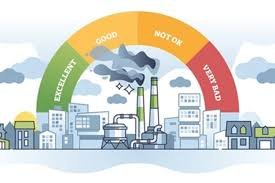
AI for Air Quality Monitoring shows how machine learning turns scattered sensor readings into actionable understanding of the air we breathe. You work with the data of the field — ground sensors, low-cost sensor networks and satellite measurements — and build models to estimate, forecast and map pollutants like PM2.5, NO2 and ozone. The course covers calibrating noisy low-cost sensors, spatial and temporal modelling, and connecting forecasts to public-health warnings and urban policy. Grounded in real air-quality data, it turns prediction into protection. You finish able to build an air-quality modelling solution. A verified e-Certificate of competency and e-Marksheet from the Deep Science & Technology Consortium.
🎯 Program Aim
This course applies AI to air quality — building predictive models for pollutants from sensor and satellite data to forecast and manage urban air pollution.
📋 Course Objectives
1. Work with ground, low-cost and satellite air-quality data.
2. Calibrate noisy low-cost sensors.
3. Estimate and map pollutants spatially.
4. Forecast pollution over time.
5. Connect forecasts to health warnings and policy.
👥 Who Should Enroll?
• Environmental and public-health data scientists
• Urban and smart-city professionals
• Air-quality researchers and analysts
• Students of environmental modelling
🚀 Key Learning Outcomes
• The ability to build an air-quality model.
• An urban-pollution forecasting project.
• Health- and policy-oriented analytics skills.
• A verified e-Certificate of competency and e-Marksheet from the Deep Science & Technology Consortium.
💎 What You'll Gain
Live & Recorded Sessions
Lifetime access to class recordingse-Certificate on Completion
Cryptographically verified credentialPost-Programme Support
Direct access to mentors & councilHands-On Experience
Notebooks, real-world code & datasetsCurriculum Outline
Day 1 – Understanding Air Quality & Data Collection
Explore health impacts of PM2.5, NOx, SO₂, CO • Gather data from IoT sensors, stations, satellites • Preprocess time‑series data using Python (Pandas, NumPy)
Day 2 – Building Predictive Models for Real‑Time Forecasting
Engineer features from weather, traffic, and historical pollution • Train regression & time‑series models (ARIMA, LSTM, Random Forest) • Evaluate models with RMSE, MAE and tune performance
Day 3 – AI‑Driven Mitigation & Decision Support Dashboards
Design AI‑based pollution mitigation strategies • Create interactive visual dashboards for real‑time alerts • Generate geographic risk maps pinpointing hotspots
Technical Specifications
| Parameter | Requirement |
|---|---|
| Covered Tool / Platform | Python |
| Covered Tool / Platform | Pandas |
| Covered Tool / Platform | NumPy |
| Covered Tool / Platform | Scikit-learn |
| Covered Tool / Platform | TensorFlow |
| Covered Tool / Platform | Keras |
| Covered Tool / Platform | ARIMA |
| Covered Tool / Platform | Plotly |
| Covered Tool / Platform | Dash |
| Covered Tool / Platform | GIS |
Frequently Asked Questions
Scholar Feedback & Reviews
Based on 0 scholar submissions
Rating Breakdown
No verified reviews published yet. Be the first to share your academic experience.
Leave Scholar Feedback
Your rating will help prospective scholars. Ratings below 3 stars are routed privately to the faculty mentor for immediate response.