Programme Parameters
Graduate / Intermediate
4 Weeks (40 Hrs)
Online (e-LMS)
• A basic understanding of the subject area and fundamental programming or scientific concepts.
• A laptop or desktop with a stable internet connection.
• Willingness to complete assignments and the capstone project.
About This Course
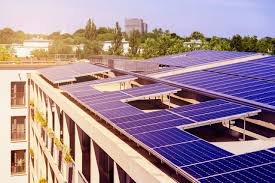
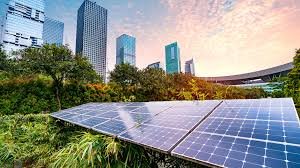
Microclimate Simulation under Solar Panels focuses on a specific, important question in agrivoltaics and solar siting: what happens to the local environment beneath the panels. You learn how photovoltaic arrays reshape light, temperature, humidity and airflow at ground level, and how to model and simulate that microclimate. The course connects these simulations to real decisions — which crops can grow beneath panels, panel layout, and land-use co-optimisation. You finish able to reason about simulating and using microclimate effects under solar installations. A verified e-Certificate of competency and e-Marksheet from the Deep Science & Technology Consortium.
🎯 Program Aim
This course covers microclimate simulation under solar panels — modelling the light, temperature, humidity and airflow beneath photovoltaic arrays for agrivoltaics and siting.
📋 Course Objectives
1. Explain how panels reshape the ground-level microclimate.
2. Model light, temperature, humidity and airflow.
3. Simulate microclimate under array layouts.
4. Link microclimate to crop suitability.
5. Support siting and layout decisions.
👥 Who Should Enroll?
• Agrivoltaics and solar professionals
• Environmental and agricultural modellers
• Renewable-energy siting analysts
• Students of sustainable land use
🚀 Key Learning Outcomes
• An understanding of solar microclimate simulation.
• An agrivoltaic siting perspective.
• A microclimate-modelling project.
• A verified e-Certificate of competency and e-Marksheet from the Deep Science & Technology Consortium.
💎 What You'll Gain
Live & Recorded Sessions
Lifetime access to class recordingse-Certificate on Completion
Cryptographically verified credentialPost-Programme Support
Direct access to mentors & councilHands-On Experience
Notebooks, real-world code & datasetsCurriculum Outline
AI Fundamentals, Mathematics, and Microclimate Simulation Foundations
Develop foundational knowledge of artificial intelligence and machine learning concepts to analyze microclimate simulation data • Analyze mathematical models used in microclimate simulation, including thermodynamics and heat transfer equations • Configure computational tools to simulate microclimate conditions under solar panels, using programming languages like Python
Data Engineering, Preprocessing, and Feature Pipelines
Design data pipelines to collect and preprocess microclimate simulation data from various sources, including sensors and weather APIs • Implement data quality control measures to ensure accuracy and reliability of microclimate simulation data • Evaluate feature extraction techniques to identify relevant variables affecting microclimate simulation under solar panels
Model Architecture, Algorithm Design, and Microclimate Simulation Methods
Design and implement machine learning models, such as neural networks and decision trees, to predict microclimate simulation outcomes • Develop algorithmic techniques to optimize microclimate simulation models, including hyperparameter tuning and model selection • Configure simulation frameworks to integrate machine learning models with microclimate simulation data
Training, Hyperparameter Optimization, and Evaluation
Train machine learning models using microclimate simulation data, evaluating performance metrics such as accuracy and mean squared error • Implement hyperparameter optimization techniques, including grid search and random search, to improve model performance • Evaluate model interpretability techniques, such as feature importance and partial dependence plots, to understand microclimate simulation outcomes
Deployment, MLOps, and Production Workflows
Deploy trained models in production environments, using containerization tools like Docker and Kubernetes • Develop MLOps workflows to monitor and maintain microclimate simulation models, including data drift detection and model updating • Configure continuous integration and continuous deployment (CI/CD) pipelines to automate model deployment and testing
Ethics, Bias Mitigation, and Responsible AI Practices
Analyze ethical considerations in microclimate simulation, including data privacy and model transparency • Implement bias mitigation techniques, such as data preprocessing and model regularization, to ensure fairness in microclimate simulation outcomes • Develop responsible AI practices, including model explainability and human oversight, to ensure reliable microclimate simulation results
Industry Integration, Business Applications, and Case Studies
Develop business cases for microclimate simulation in various industries, including solar energy and urban planning • Analyze case studies of successful microclimate simulation applications, including cost savings and performance improvements • Configure microclimate simulation models for industry-specific use cases, including building energy efficiency and agricultural productivity
Technical Specifications
| Parameter | Requirement |
|---|---|
| Covered Tool / Platform | Python |
| Covered Tool / Platform | TensorFlow |
| Covered Tool / Platform | scikit-learn |
| Covered Tool / Platform | Docker |
| Covered Tool / Platform | Kubernetes |
Frequently Asked Questions
Scholar Feedback & Reviews
Based on 0 scholar submissions
Rating Breakdown
No verified reviews published yet. Be the first to share your academic experience.
Leave Scholar Feedback
Your rating will help prospective scholars. Ratings below 3 stars are routed privately to the faculty mentor for immediate response.