Programme Parameters
Graduate / Intermediate
4 Weeks (40 Hrs)
Online (e-LMS)
• A basic understanding of the subject area and fundamental programming or scientific concepts.
• A laptop or desktop with a stable internet connection.
• Willingness to complete assignments and the capstone project.
About This Course
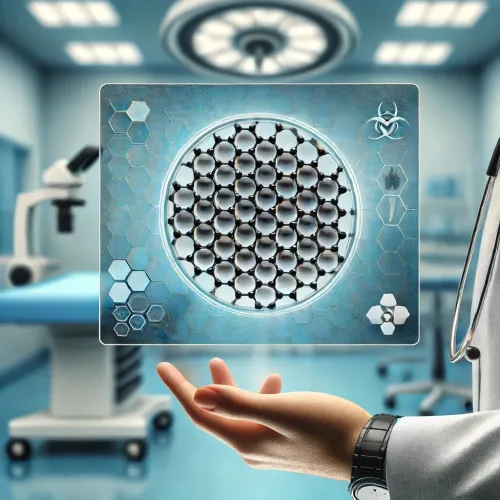
Medical Applications of Graphene examines why this two-dimensional material has drawn so much biomedical interest, and where the real opportunities and obstacles lie. You will study graphene and its derivatives — graphene oxide, reduced graphene oxide — and their use in ultrasensitive biosensors, targeted drug delivery, bioimaging and tissue-engineering scaffolds. The course pairs each application with the questions that decide clinical viability: biocompatibility, toxicity, functionalisation and regulatory hurdles. You finish able to critically assess a graphene-based biomedical claim rather than take it at face value. A verified e-Certificate of competency and e-Marksheet from the Deep Science & Technology Consortium.
🎯 Program Aim
Medical Applications of Graphene surveys how graphene and its derivatives are used in biosensing, drug delivery, imaging and tissue engineering, with the biocompatibility issues that gate them.
📋 Course Objectives
1. Distinguish graphene, graphene oxide and reduced graphene oxide.
2. Explain graphene-based biosensing and its sensitivity.
3. Assess graphene for drug delivery, imaging and scaffolds.
4. Evaluate biocompatibility, toxicity and functionalisation.
5. Critically appraise biomedical graphene research.
👥 Who Should Enroll?
• Nanomaterials and biomedical researchers
• PhD scholars in nanomedicine and biosensing
• Materials-science and biotech professionals
• Students exploring 2D materials in healthcare
🚀 Key Learning Outcomes
• A critical understanding of graphene’s biomedical uses.
• The ability to evaluate feasibility and safety claims.
• A foundation for nanomedicine research.
• A verified e-Certificate of competency and e-Marksheet from the Deep Science & Technology Consortium.
💎 What You'll Gain
Live & Recorded Sessions
Lifetime access to class recordingse-Certificate on Completion
Cryptographically verified credentialPost-Programme Support
Direct access to mentors & councilHands-On Experience
Notebooks, real-world code & datasetsCurriculum Outline
Nano and Materials Science Foundations for Medical Applications Of Graphene
Analyze the structural and electrical properties of graphene and its derivatives for biomedical applications • Develop a comprehensive understanding of the fundamental principles of nanomaterials and their interactions with biological systems • Evaluate the potential of graphene-based nanomaterials for drug delivery, tissue engineering, and biosensing applications
Characterization Techniques and Instrumentation Pipelines
Configure and operate advanced characterization techniques such as atomic force microscopy and Raman spectroscopy for graphene analysis • Design and optimize experimental protocols for the characterization of graphene-based materials and devices • Interpret and analyze data from various characterization techniques to determine the physical and chemical properties of graphene
Synthesis, Fabrication, and Process Design
Design and develop scalable synthesis methods for high-quality graphene and its derivatives • Implement various fabrication techniques such as chemical vapor deposition and molecular beam epitaxy for graphene production • Optimize process conditions and parameters to achieve high-yield and high-purity graphene synthesis
Computational Materials Modeling and Simulation
Develop and apply computational models to simulate the behavior of graphene-based materials and devices • Evaluate the mechanical, thermal, and electrical properties of graphene using molecular dynamics and density functional theory simulations • Predict and analyze the performance of graphene-based devices using finite element methods and machine learning algorithms
Device Integration, Testing, and System Performance
Configure and test graphene-based devices such as biosensors, implantable devices, and wearable electronics • Design and develop system-level integration strategies for graphene-based devices and systems • Evaluate the performance and reliability of graphene-based devices and systems using standardized testing protocols
Safety, Standards, and Regulatory Compliance
Analyze and interpret regulatory requirements and standards for graphene-based medical devices and applications • Develop and implement safety protocols and guidelines for handling and processing graphene-based materials • Evaluate the environmental and health impacts of graphene-based products and devices
Industrial Applications and Sector-Specific Use Cases
Develop business cases and market analysis for graphene-based products and applications in the medical industry • Evaluate the potential of graphene-based technologies for addressing specific challenges and needs in the medical sector • Identify and analyze sector-specific use cases and applications of graphene-based materials and devices
Technical Specifications
| Parameter | Requirement |
|---|---|
| Covered Tool / Platform | Python |
| Covered Tool / Platform | MATLAB |
| Covered Tool / Platform | COMSOL |
Frequently Asked Questions
Scholar Feedback & Reviews
Based on 0 scholar submissions
Rating Breakdown
No verified reviews published yet. Be the first to share your academic experience.
Leave Scholar Feedback
Your rating will help prospective scholars. Ratings below 3 stars are routed privately to the faculty mentor for immediate response.