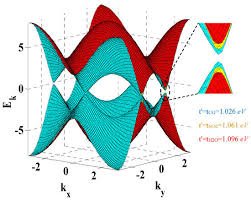
Programme Parameters
Graduate / Intermediate
4 Weeks (40 Hrs)
Online (e-LMS)
• A basic understanding of the subject area and fundamental programming or scientific concepts.
• A laptop or desktop with a stable internet connection.
• Willingness to complete assignments and the capstone project.
About This Course
AI for Graphene Sensor Data Analytics joins an advanced material with modern analytics. Graphene sensors are exquisitely sensitive, but that sensitivity produces noisy, high-dimensional signals that need intelligent processing. You learn the sensing principles behind graphene devices, then the data pipeline that makes them useful: signal processing and denoising, feature extraction, and machine-learning classification and regression for detection and quantification. Applications in gas, biomedical and environmental sensing ground the work. You finish able to build an analytics pipeline that turns graphene-sensor output into reliable measurement. A verified e-Certificate of competency and e-Marksheet from the Deep Science & Technology Consortium.
🎯 Program Aim
This course applies machine learning to graphene-based sensor data — signal processing, feature extraction and classification for high-sensitivity sensing applications.
📋 Course Objectives
1. Explain graphene sensing principles and signal characteristics.
2. Process and denoise high-sensitivity sensor signals.
3. Extract features from sensor time series.
4. Build classification and regression models for detection.
5. Apply the pipeline to gas, biomedical or environmental sensing.
👥 Who Should Enroll?
• Nanomaterials and sensor researchers
• Data scientists in sensing applications
• Biomedical and environmental-monitoring engineers
• Students at the materials-and-AI intersection
🚀 Key Learning Outcomes
• The ability to analyse graphene-sensor data with ML.
• A sensor-analytics pipeline project.
• Skills bridging nanomaterials and data science.
• A verified e-Certificate of competency and e-Marksheet from the Deep Science & Technology Consortium.
💎 What You'll Gain
Live & Recorded Sessions
Lifetime access to class recordingse-Certificate on Completion
Cryptographically verified credentialPost-Programme Support
Direct access to mentors & councilHands-On Experience
Notebooks, real-world code & datasetsCurriculum Outline
Nano and Materials Science Foundations for AI
Analyze the structural and electrical properties of graphene and its implications for sensor data analytics • Develop a comprehensive understanding of the fundamental principles of nanomaterials and their applications in sensing technologies • Evaluate the role of nano and materials science in the development of advanced graphene-based sensors
Characterization Techniques and Instrumentation Pipelines
Configure and operate various characterization techniques such as Raman spectroscopy, scanning electron microscopy, and atomic force microscopy for graphene sensor analysis • Design and implement instrumentation pipelines for data acquisition and processing in graphene sensor characterization • Optimize the experimental conditions and parameters for accurate and reliable characterization of graphene sensors
Synthesis, Fabrication, and Process Design
Design and develop scalable synthesis methods for high-quality graphene materials with controlled properties • Implement various fabrication techniques such as chemical vapor deposition, molecular beam epitaxy, and inkjet printing for graphene sensor fabrication • Evaluate the effects of process conditions on the properties and performance of graphene sensors
Computational Materials Modeling and Simulation
Develop and apply computational models for simulating the behavior of graphene materials and sensors using density functional theory and molecular dynamics • Analyze the electronic and transport properties of graphene using computational tools such as MATLAB and Python • Validate the accuracy of computational models against experimental data for graphene sensor applications
Device Integration, Testing, and System Performance
Integrate graphene sensors with electronic circuits and systems for real-time data acquisition and processing • Design and conduct experiments to test the performance of graphene sensors in various environments and conditions • Evaluate the system-level performance of graphene sensor-based devices and identify areas for improvement
Safety, Standards, and Regulatory Compliance
Analyze the safety and health risks associated with graphene handling and processing • Develop and implement standard operating procedures for safe handling and disposal of graphene materials • Evaluate the regulatory compliance of graphene sensor-based devices with respect to industry standards and guidelines
Industrial Applications and Sector-Specific Use Cases
Identify and analyze the potential applications of graphene sensors in various industries such as healthcare, aerospace, and automotive • Develop sector-specific use cases for graphene sensor-based devices and systems • Evaluate the market potential and competitiveness of graphene sensor-based products in various industries
Technical Specifications
| Parameter | Requirement |
|---|---|
| Covered Tool / Platform | Python |
| Covered Tool / Platform | TensorFlow |
| Covered Tool / Platform | MATLAB |
| Covered Tool / Platform | Scikit-learn |
Frequently Asked Questions
Scholar Feedback & Reviews
Based on 0 scholar submissions
Rating Breakdown
No verified reviews published yet. Be the first to share your academic experience.
Leave Scholar Feedback
Your rating will help prospective scholars. Ratings below 3 stars are routed privately to the faculty mentor for immediate response.