Programme Parameters
Graduate / Intermediate
4 Weeks (40 Hrs)
Online (e-LMS)
• A basic understanding of the subject area and fundamental programming or scientific concepts.
• A laptop or desktop with a stable internet connection.
• Willingness to complete assignments and the capstone project.
About This Course
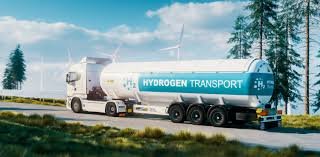
Hydrogen Hubs: Electrolyzers, Storage, Transport, and End Use takes a systems view of building the hydrogen economy. You learn how the pieces fit into a hub: electrolyser technologies that produce hydrogen from renewables, the challenges of storing and transporting it, and the end uses that create demand. The course centres on integrating these into viable, infrastructure-scale hydrogen hubs, and the economics and siting they require. You finish able to reason about the design of a hydrogen hub. A verified e-Certificate of competency and e-Marksheet from the Deep Science & Technology Consortium.
🎯 Program Aim
This course covers hydrogen hubs — the integrated infrastructure of electrolysers, storage, transport and end use that turns hydrogen into a working energy system.
📋 Course Objectives
1. Compare electrolyser technologies.
2. Understand hydrogen storage options.
3. Address transport and distribution.
4. Map end uses and demand.
5. Integrate the pieces into a hydrogen hub.
👥 Who Should Enroll?
• Energy and infrastructure engineers
• Hydrogen and decarbonisation professionals
• Planners and project developers
• Students of clean energy
🚀 Key Learning Outcomes
• An understanding of hydrogen-hub systems.
• An infrastructure-scale perspective.
• A hydrogen-economy foundation.
• A verified e-Certificate of competency and e-Marksheet from the Deep Science & Technology Consortium.
💎 What You'll Gain
Live & Recorded Sessions
Lifetime access to class recordingse-Certificate on Completion
Cryptographically verified credentialPost-Programme Support
Direct access to mentors & councilHands-On Experience
Notebooks, real-world code & datasetsCurriculum Outline
AI Fundamentals, Mathematics, and Hydrogen Hubs Electrolyzers Storage Transport And Enduse Cases Foundations
Apply mathematical modeling techniques to simulate hydrogen production and storage systems • Develop algorithms to optimize electrolyzer performance and efficiency • Analyze data from existing hydrogen hubs to identify trends and patterns in energy consumption and production
Data Engineering, Preprocessing, and Feature Pipelines
Design and implement data pipelines to integrate data from various sources, including sensors and IoT devices • Configure data preprocessing techniques to handle missing values and outliers in hydrogen production data • Evaluate the performance of different feature engineering methods for improving model accuracy
Model Architecture, Algorithm Design, and Hydrogen Hubs Electrolyzers Storage Transport And Enduse Cases Methods
Implement deep learning models to predict hydrogen demand and optimize storage capacity • Develop and train machine learning algorithms to detect anomalies in electrolyzer performance • Optimize model hyperparameters to improve the accuracy of hydrogen production forecasts
Training, Hyperparameter Optimization, and Evaluation
Train and evaluate machine learning models using various datasets and performance metrics • Configure hyperparameter tuning techniques to optimize model performance and efficiency • Analyze the results of model evaluation to identify areas for improvement and optimize model architecture
Deployment, MLOps, and Production Workflows
Deploy trained models to a cloud-based platform for real-time prediction and optimization • Design and implement MLOps workflows to automate model training, deployment, and monitoring • Configure model serving infrastructure to handle high-volume traffic and ensure scalability
Ethics, Bias Mitigation, and Responsible AI Practices
Evaluate the ethical implications of AI-powered hydrogen hubs and develop strategies for mitigating bias • Develop and implement fairness metrics to ensure equitable access to hydrogen energy • Analyze the environmental impact of AI-powered hydrogen production and develop sustainable practices
Industry Integration, Business Applications, and Case Studies
Develop business cases for the adoption of AI-powered hydrogen hubs in various industries • Analyze the economic benefits and challenges of implementing AI-powered hydrogen production • Evaluate the feasibility of integrating AI-powered hydrogen hubs with existing energy infrastructure
Technical Specifications
| Parameter | Requirement |
|---|---|
| Covered Tool / Platform | Python |
| Covered Tool / Platform | TensorFlow |
| Covered Tool / Platform | PyTorch |
Frequently Asked Questions
Scholar Feedback & Reviews
Based on 0 scholar submissions
Rating Breakdown
No verified reviews published yet. Be the first to share your academic experience.
Leave Scholar Feedback
Your rating will help prospective scholars. Ratings below 3 stars are routed privately to the faculty mentor for immediate response.