Programme Parameters
Graduate / Intermediate
4 Weeks (40 Hrs)
Online (e-LMS)
• A basic understanding of the subject area and fundamental programming or scientific concepts.
• A laptop or desktop with a stable internet connection.
• Willingness to complete assignments and the capstone project.
About This Course
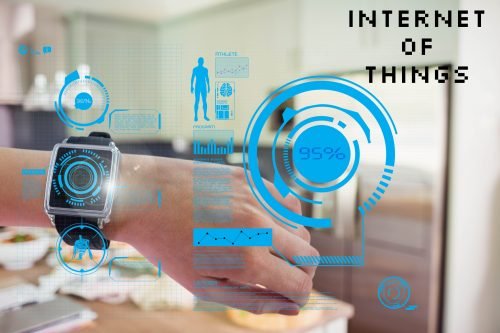
AI for Internet of Things joins two of the most active areas in technology: the flood of data from connected sensors, and the models that make sense of it. You learn to ingest and clean noisy sensor streams, engineer features from time-series data, and build models for the signature IoT tasks — anomaly detection, predictive maintenance and activity recognition. A key focus is edge AI: compressing and deploying models to run on constrained, low-power devices rather than the cloud. You finish able to design an end-to-end AIoT solution from sensor to prediction. A verified e-Certificate of competency and e-Marksheet from the Deep Science & Technology Consortium.
🎯 Program Aim
This course covers AIoT — applying machine learning to IoT sensor streams, from data pipelines and time-series models to lightweight edge inference on constrained devices.
📋 Course Objectives
1. Ingest and clean streaming sensor data.
2. Engineer features from IoT time series.
3. Build anomaly-detection and predictive-maintenance models.
4. Compress models for lightweight edge inference.
5. Design an end-to-end sensor-to-prediction pipeline.
👥 Who Should Enroll?
• Embedded and IoT engineers adding ML
• Data scientists working with sensor data
• Hardware and product teams building smart devices
• Students specialising in edge AI
🚀 Key Learning Outcomes
• The ability to build an AIoT solution end to end.
• Experience deploying models to edge devices.
• An IoT machine-learning project.
• A verified e-Certificate of competency and e-Marksheet from the Deep Science & Technology Consortium.
💎 What You'll Gain
Live & Recorded Sessions
Lifetime access to class recordingse-Certificate on Completion
Cryptographically verified credentialPost-Programme Support
Direct access to mentors & councilHands-On Experience
Notebooks, real-world code & datasetsCurriculum Outline
AI Fundamentals, Mathematics, and AI for IoT Foundations
Develop a comprehensive understanding of AI and machine learning concepts, including supervised, unsupervised, and reinforcement learning • Analyze mathematical foundations of AI, including linear algebra, calculus, and probability theory, and their applications in IoT • Design simple AI models using Python and relevant libraries, and apply them to real-world IoT problems
Data Engineering, Preprocessing, and Feature Pipelines
Configure data pipelines for IoT devices, including data ingestion, processing, and storage using tools like Apache Kafka and Apache Spark • Implement data preprocessing techniques, including handling missing values, data normalization, and feature scaling, for IoT datasets • Evaluate the performance of different feature extraction and selection methods for IoT data, including PCA, t-SNE, and mutual information
Model Architecture, Algorithm Design, and AI for IoT Methods
Design and implement deep learning models, including CNNs, RNNs, and LSTMs, for IoT applications like image classification and time series forecasting • Develop and evaluate the performance of traditional machine learning algorithms, including decision trees, random forests, and SVMs, for IoT datasets • Analyze the trade-offs between different model architectures and algorithms for IoT applications, including accuracy, interpretability, and computational resources
Training, Hyperparameter Optimization, and Evaluation
Implement hyperparameter tuning techniques, including grid search, random search, and Bayesian optimization, for IoT AI models • Evaluate the performance of IoT AI models using metrics like accuracy, precision, recall, F1-score, and mean squared error • Develop and apply techniques for model interpretability and explainability, including feature importance, partial dependence plots, and SHAP values
Deployment, MLOps, and Production Workflows
Configure and deploy IoT AI models using cloud platforms like AWS, Azure, and Google Cloud, and containerization tools like Docker • Implement MLOps practices, including model versioning, monitoring, and updating, for IoT AI applications • Develop and apply DevOps practices, including continuous integration, continuous deployment, and continuous monitoring, for IoT AI workflows
Ethics, Bias Mitigation, and Responsible AI Practices
Analyze the ethical implications of IoT AI applications, including privacy, security, and fairness • Develop and apply techniques for bias mitigation and fairness in IoT AI models, including data preprocessing, feature engineering, and model regularization • Evaluate the transparency and explainability of IoT AI models, and develop strategies for improving model interpretability and trustworthiness
Industry Integration, Business Applications, and Case Studies
Develop and apply IoT AI solutions for real-world industry applications, including smart cities, industrial automation, and healthcare • Analyze the business value and ROI of IoT AI applications, including cost savings, revenue growth, and competitive advantage • Evaluate the scalability and reliability of IoT AI solutions, and develop strategies for ensuring their long-term maintenance and support
Technical Specifications
| Parameter | Requirement |
|---|---|
| Covered Tool / Platform | Python |
| Covered Tool / Platform | TensorFlow |
| Covered Tool / Platform | PyTorch |
| Covered Tool / Platform | Scikit-learn |
| Covered Tool / Platform | Apache Kafka |
| Covered Tool / Platform | Apache Spark |
Frequently Asked Questions
Scholar Feedback & Reviews
Based on 0 scholar submissions
Rating Breakdown
No verified reviews published yet. Be the first to share your academic experience.
Leave Scholar Feedback
Your rating will help prospective scholars. Ratings below 3 stars are routed privately to the faculty mentor for immediate response.