Global Academic Alliance

πŸ›οΈ Official Portal of the Deep Science and Technology Consortium | Global Academic Alliance
DSTC-102553 Online (e-LMS) Advanced Postgrad

Advanced Manufacturing and Smart Factories

by - DSTC

Master Advanced Manufacturing and Smart Factories in 6 weeks through hands-on, project-based online training with DSTC.

β˜…β˜…β˜…β˜…β˜… Be the first to review β€’ 6 Weeks Β· 60 hrs β€’ e-Certificate Included
Enroll Now
From β‚Ή5,500 + GST

Programme Parameters

Educational Level:
Advanced Postgrad
Duration & Workload:
6 Weeks (60 Hrs)
Delivery Mode:
Online (e-LMS)
Prerequisites:
β€’ Prior working knowledge of the field and comfort with core tools and quantitative reasoning.
β€’ A laptop or desktop with a stable internet connection.
β€’ Willingness to complete assignments and the capstone project.

About This Course

Advanced manufacturing is not a single technology. It is a system-level shift that integrates automation, sensing, connectivity, and data analytics into production environments. Every participant receives a verified e-Certificate and e-Marksheet from the Deep Science & Technology Consortium.

🎯 Program Aim

Advanced manufacturing is not a single technology. It is a system-level shift that integrates automation, sensing, connectivity, and data analytics into production environments.

πŸ“‹ Course Objectives

1. Apply AI Enablement methods to authentic research and industry problems.
2. Build a defensible project you can showcase to supervisors, reviewers, or employers.

πŸ‘₯ Who Should Enroll?

β€’ Master's and senior undergraduate students specializing in AI Enablement
β€’ R&D engineers and working professionals applying AI Enablement in industry
β€’ Academics and educators building research or teaching capacity in AI Enablement

πŸš€ Key Learning Outcomes

β€’ Tangible, reproducible AI Enablement work to show supervisors or employers.
β€’ A verified e-Certificate of competency and e-Marksheet from the Deep Science & Technology Consortium.

πŸ’Ž What You'll Gain

πŸŽ₯

Live & Recorded Sessions

Lifetime access to class recordings
πŸŽ“

e-Certificate on Completion

Cryptographically verified credential
πŸ’¬

Post-Programme Support

Direct access to mentors & council
πŸ’»

Hands-On Experience

Notebooks, real-world code & datasets

Curriculum Outline

Module 1 Paradigm

The System-Level Shift, Not a Single Tool

β€’ Cyber-physical systems and the field β†’ edge β†’ cloud layering of a modern plant
β€’ Industry 4.0 and 5.0 claims separated from the parts that are genuinely new
β€’ Why most "smart factory" failures are integration failures, not technology gaps

Module 2 Connectivity

Instrumenting the Shop Floor

β€’ Sensors, PLCs and gateways, and the OPC UA and MQTT protocols that move their data
β€’ Brownfield retrofits β€” extracting data from machines never designed to share it
β€’ OT/IT convergence and the security exposure it creates on the production network

Module 3 Analytics

Turning Machine Data Into Decisions

β€’ Time-series condition monitoring and predictive maintenance on vibration and current signals
β€’ The cost asymmetry between a false alarm and a missed failure, and how it sets thresholds
β€’ Baseline drift as equipment ages, and why a model tuned at commissioning decays

Module 4 Digital Twins

Modelling the Line Before Changing It

β€’ Physics-based and data-driven twins, and what each can and cannot represent
β€’ Synchronising a twin with live data and the latency budget that keeps it useful
β€’ Simulation for line balancing and what-if analysis instead of trial on real production

Module 5 Automation

Robots, Cobots and Flexible Cells

β€’ Collaborative-robot operating modes and the safety requirements of ISO/TS 15066
β€’ Speed-and-separation monitoring and power-and-force limiting in a real cell
β€’ Allocating tasks between human and machine on capability and variability, not labour cost alone

Module 6 Capstone

One Use Case, End to End

β€’ Scoping a predictive-maintenance or automated-inspection case with a measurable payback
β€’ Tracing the path from a raw sensor signal to an operator-facing decision
β€’ Presenting the business case honestly, including where the data or ROI does not yet support it

Frequently Asked Questions

Advanced Manufacturing and Smart Factories is a practical 3-week course that teaches how traditional factories are transformed into intelligent, connected systems using Industry 4.0 technologies. You will learn about Industrial IoT, digital twins, predictive maintenance, AI-driven automation, PLC/SCADA systems, MES integration, and real-time data analytics to build flexible, efficient, and future-ready manufacturing environments.

Yes. The course is designed for engineers, manufacturing professionals, and students who want to enter Industry 4.0. It starts with foundational concepts of smart factory architecture and gradually moves into AI applications, IoT integration, and hands-on system modeling β€” no prior factory experience is required.

Smart factories are the future of manufacturing. Companies are rapidly adopting AI, digital twins, and predictive maintenance to reduce downtime, increase productivity, and stay competitive. This course gives you job-ready skills in the most in-demand area of industrial transformation, helping you stand out in both Indian and global manufacturing sectors.

After completing this course you can target roles such as Smart Factory Engineer, Industry 4.0 Specialist, Automation Engineer, Digital Twin Developer, Predictive Maintenance Analyst, and Manufacturing Data Scientist. In India, freshers with these skills earn β‚Ή6–12 LPA, while experienced professionals can command β‚Ή15–30+ LPA in companies adopting smart manufacturing.

You will work with Industrial IoT platforms, PLC/SCADA systems, MES software, digital twin simulation tools, Python for data analytics, TensorFlow/PyTorch for AI applications, predictive maintenance models, and real-time dashboard development β€” exactly the stack used in modern smart factories.

DSTC’s program stands out with its strong focus on hands-on projects, real-world smart factory architecture, AI integration, and practical system-level implementation. Most other courses in India are either too theoretical or limited to basic IoT; this course delivers actual project showcases and job-ready skills with official certification.

The course is structured as a complete 3-week online program. With dedicated modules and guided projects, most learners finish it comfortably while working or studying, gaining both conceptual clarity and practical implementation experience.

Yes. You will receive an official DSTC e-Certification and e-Marksheet upon successful completion. The certificate is valued for both academic records and industry job applications across India and abroad.

Absolutely. You will work on practical projects including digital twin simulation, predictive maintenance model building, smart factory workflow optimization, IoT data analytics dashboards, and AI-driven process improvement β€” all of which can be added directly to your portfolio.

The course is designed to be approachable. It starts with clear foundations of Industry 4.0 and smart factory concepts, then builds practical skills step-by-step with code examples, tool comparisons, and project showcases. Engineers and technical professionals usually find it engaging and manageable within the 3-week duration.

Scholar Feedback & Reviews

5.0

Based on 0 scholar submissions

Rating Breakdown
5 Star
0
4 Star
0
3 Star
0
2 Star
0
1 Star
0

No verified reviews published yet. Be the first to share your academic experience.

Leave Scholar Feedback

Your rating will help prospective scholars. Ratings below 3 stars are routed privately to the faculty mentor for immediate response.

Scholar Registration

For scholars whose department, college or employer pays the fee. We raise a proforma invoice to your institution; you attach the signed processing letter or bank slip.

The proforma invoice is emailed here as well as to you.
πŸ“„ Upload Sponsorship Slip / Letter

Signed letter on official letterhead, or the bank transfer slip. PDF/JPG/PNG, up to 5 MB.

Share this Programme

Related Programmes from DSTC

DSTC-00889 Online

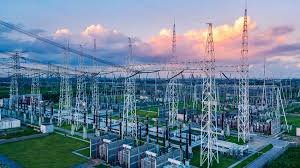
AI-First Predictive Maintenance for Legacy Substations

by - DSTC

AI-First Predictive Maintenance for Legacy Substations is an Advanced-level, 3 Days (60-90 Minutes each day) online program by DSTC. Master…

LEVEL Advanced Postgrad
DURATION 3 Days
DSTC-00454 Online

Machine Learning for IC Yield: Models, SHAP Explainability & APC/R2R

by - DSTC

Machine Learning for IC Yield: Models, SHAP Explainability & APC/R2R is an Intermediate-level, 4 Weeks online program by DSTC. Master…

LEVEL Graduate / Intermediate
DURATION 4 Weeks
DSTC-A23 Online

Predictive Maintenance: Basics

by - DSTC

Introduction to predictive maintenance, types of maintenance, industrial applications, and the role of machine and sensor data in maintenance systems.…

LEVEL Advanced Postgrad
DURATION 4 Weeks