Programme Parameters
Graduate / Intermediate
4 Weeks (40 Hrs)
Online (e-LMS)
• A basic understanding of the subject area and fundamental programming or scientific concepts.
• A laptop or desktop with a stable internet connection.
• Willingness to complete assignments and the capstone project.
About This Course
The Internet of Things (IoT) in Manufacturing course is an intermediate-level program designed to provide learners with a structured understanding of how connected technologies are transforming modern manufacturing systems. The course focuses on the use of internet-enabled devices, sensors, machines, and data-driven workflows to improve production efficiency, equipment monitoring, process control, quality management, and industrial decision-making. Every participant receives a verified e-Certificate and e-Marksheet from the Deep Science & Technology Consortium.
🎯 Program Aim
The Internet of Things (IoT) in Manufacturing course is an intermediate-level program designed to provide learners with a structured understanding of how connected technologies are transforming modern manufacturing systems. The course focuses on the use of internet-enabled devices, sensors, machines, and data-driven workflows to improve production efficiency, equipment monitoring, process control, quality management, and industrial decision-making.
📋 Course Objectives
1. Put biotechnology techniques to work on real datasets and case studies.
2. Build a defensible project you can showcase to supervisors, reviewers, or employers.
👥 Who Should Enroll?
• Master's and senior undergraduate students specializing in biotechnology
• R&D engineers and working professionals applying biotechnology in industry
• Academics and educators building research or teaching capacity in biotechnology
🚀 Key Learning Outcomes
• A portfolio-grade biotechnology deliverable you can defend and extend.
• A verified e-Certificate of competency and e-Marksheet from the Deep Science & Technology Consortium.
💎 What You'll Gain
Live & Recorded Sessions
Lifetime access to class recordingse-Certificate on Completion
Cryptographically verified credentialPost-Programme Support
Direct access to mentors & councilHands-On Experience
Notebooks, real-world code & datasetsCurriculum Outline
Introduction to IoT in Manufacturing
Overview of Internet of Things in Manufacturing • Evolution from Traditional Manufacturing to Smart Manufacturing • Role of Connected Systems in Industrial Operations • Benefits of IoT for Productivity, Safety, and Efficiency
Fundamentals of Connected Manufacturing Systems
Understanding Internet-Enabled Industrial Devices • Sensors, Machines, Controllers, and Connected Equipment • Data Flow Across Manufacturing Environments • Key Components of IoT-Based Production Systems
Smart Factories and Industrial Digital Transformation
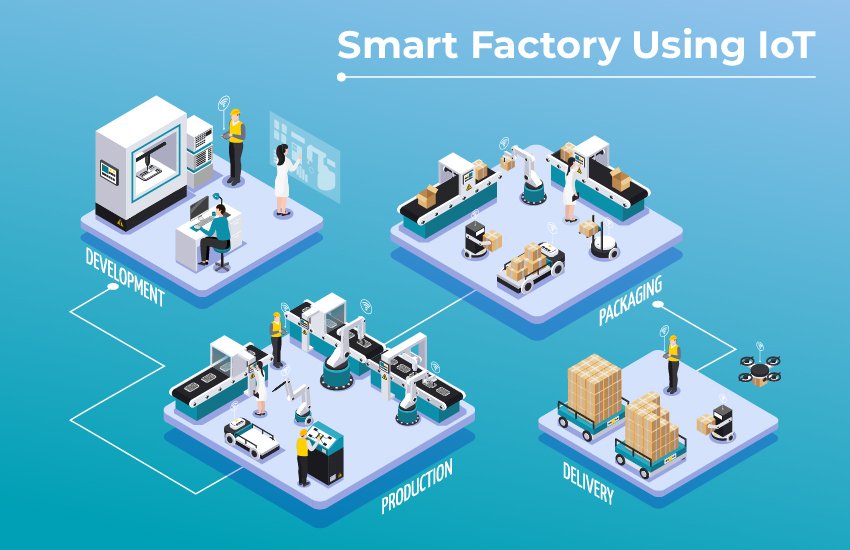
Concept of Smart Factories • Connected Production Lines and Automated Workflows • Role of IoT in Digital Manufacturing Transformation • Improving Visibility Across Manufacturing Operations
Real-Time Monitoring and Data Collection
Real-Time Equipment and Process Monitoring • Data Collection from Machines, Sensors, and Production Lines • Tracking Temperature, Pressure, Vibration, Speed, and Performance Indicators • Using Connected Data for Operational Awareness
Predictive Maintenance in Manufacturing
Introduction to Predictive Maintenance • Monitoring Equipment Health and Failure Indicators • Reducing Downtime Through Early Fault Detection • Applications in Machines, Motors, Pumps, Conveyors, and Industrial Assets
Quality Control and Process Optimization
IoT for Production Quality Monitoring • Identifying Process Variations and Defects • Improving Manufacturing Consistency Through Connected Systems • Using Data-Driven Insights for Process Optimization
Safety, Asset Tracking, and Operational Efficiency
IoT for Worker Safety and Hazard Monitoring • Asset Tracking Across Manufacturing Facilities • Inventory, Material Movement, and Supply Chain Visibility • Improving Operational Efficiency Through Connected Infrastructure
Challenges, Case Studies, and Future Opportunities
Implementation Challenges in IoT-Based Manufacturing • Data Security, Connectivity, Cost, and Integration Issues • Case Studies in Smart Manufacturing and Connected Operations • Future Opportunities in Intelligent, Flexible, and Sustainable Manufacturing
Technical Specifications
| Parameter | Requirement |
|---|---|
| Covered Tool / Platform | Internet |
Frequently Asked Questions
Scholar Feedback & Reviews
Based on 0 scholar submissions
Rating Breakdown
No verified reviews published yet. Be the first to share your academic experience.
Leave Scholar Feedback
Your rating will help prospective scholars. Ratings below 3 stars are routed privately to the faculty mentor for immediate response.