Programme Parameters
Graduate / Intermediate
4 Weeks (40 Hrs)
Online (e-LMS)
• A basic understanding of the subject area and fundamental programming or scientific concepts.
• A laptop or desktop with a stable internet connection.
• Willingness to complete assignments and the capstone project.
About This Course
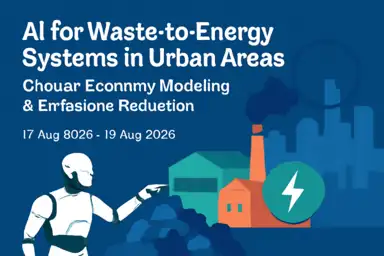
AI for Waste-to-Energy Systems in Urban Areas shows how machine learning improves the recovery of energy from the waste cities inevitably produce. You learn to apply AI across the waste-to-energy chain: characterising and sorting feedstock with computer vision, optimising combustion, digestion or gasification processes, and forecasting energy output. The course connects these to the goals of a circular, low-waste city and the environmental constraints these systems operate under. You finish able to reason about an AI approach to an urban waste-to-energy problem. A verified e-Certificate of competency and e-Marksheet from the Deep Science & Technology Consortium.
🎯 Program Aim
This course applies AI to waste-to-energy systems — optimising the conversion of urban waste into energy, from feedstock sorting to process efficiency.
📋 Course Objectives
1. Characterise and sort waste feedstock with AI.
2. Optimise waste-to-energy conversion processes.
3. Forecast energy recovery and output.
4. Reduce emissions and improve efficiency.
5. Connect systems to circular-city goals.
👥 Who Should Enroll?
• Waste and energy engineers
• Sustainability and utility professionals
• Data scientists in the circular economy
• Students of environmental engineering
🚀 Key Learning Outcomes
• An understanding of AI in waste-to-energy.
• A resource-recovery perspective.
• A sustainable-systems project.
• A verified e-Certificate of competency and e-Marksheet from the Deep Science & Technology Consortium.
💎 What You'll Gain
Live & Recorded Sessions
Lifetime access to class recordingse-Certificate on Completion
Cryptographically verified credentialPost-Programme Support
Direct access to mentors & councilHands-On Experience
Notebooks, real-world code & datasetsCurriculum Outline
AI Fundamentals, Mathematics, and Ai For Wastetoenergy Systems In Urban Areas Foundations
Implement Energy with sustainability for practical ai fundamentals, mathematics, and ai for wastetoenergy systems in urban areas foundations applications and outcomes. • Design Systems with Waste for practical ai fundamentals, mathematics, and ai for wastetoenergy systems in urban areas foundations applications and outcomes. • Analyze Energy with sustainability for practical ai fundamentals, mathematics, and ai for wastetoenergy systems in urban areas foundations applications and outcomes.
Data Engineering, Preprocessing, and Feature Pipelines
Implement Energy with sustainability for practical data engineering, preprocessing, and feature pipelines applications and outcomes. • Design Systems with Waste for practical data engineering, preprocessing, and feature pipelines applications and outcomes. • Analyze Energy with sustainability for practical data engineering, preprocessing, and feature pipelines applications and outcomes.
Model Architecture, Algorithm Design, and Ai For Wastetoenergy Systems In Urban Areas Methods
Implement Energy with sustainability for practical model architecture, algorithm design, and ai for wastetoenergy systems in urban areas methods applications and outcomes. • Design Systems with Waste for practical model architecture, algorithm design, and ai for wastetoenergy systems in urban areas methods applications and outcomes. • Analyze Energy with sustainability for practical model architecture, algorithm design, and ai for wastetoenergy systems in urban areas methods applications and outcomes.
Training, Hyperparameter Optimization, and Evaluation
Implement Energy with sustainability for practical training, hyperparameter optimization, and evaluation applications and outcomes. Gain hands-on experience and produce real-world projects. • Design Systems with Waste for practical training, hyperparameter optimization, and evaluation applications and outcomes. Gain hands-on experience and produce real-world projects. • Analyze Energy with sustainability for practical training, hyperparameter optimization, and evaluation applications and outcomes. Gain hands-on experience and produce real-world projects.
Deployment, MLOps, and Production Workflows
Implement Energy with sustainability for practical deployment, mlops, and production workflows applications and outcomes. Gain hands-on experience and produce real-world projects. • Design Systems with Waste for practical deployment, mlops, and production workflows applications and outcomes. Gain hands-on experience and produce real-world projects. • Analyze Energy with sustainability for practical deployment, mlops, and production workflows applications and outcomes. Gain hands-on experience and produce real-world projects.
Ethics, Bias Mitigation, and Responsible AI Practices
Implement Energy with sustainability for practical ethics, bias mitigation, and responsible ai practices applications and outcomes. • Design Systems with Waste for practical ethics, bias mitigation, and responsible ai practices applications and outcomes. • Analyze Energy with sustainability for practical ethics, bias mitigation, and responsible ai practices applications and outcomes.
Industry Integration, Business Applications, and Case Studies
Implement Energy with sustainability for practical industry integration, business applications, and case studies applications and outcomes. • Design Systems with Waste for practical industry integration, business applications, and case studies applications and outcomes. • Analyze Energy with sustainability for practical industry integration, business applications, and case studies applications and outcomes.
Advanced Research, Emerging Trends, and Ai For Wastetoenergy Systems In Urban Areas Innovations
Implement Energy with sustainability for practical advanced research, emerging trends, and ai for wastetoenergy systems in urban areas innovations applications and outcomes. • Design Systems with Waste for practical advanced research, emerging trends, and ai for wastetoenergy systems in urban areas innovations applications and outcomes. • Analyze Energy with sustainability for practical advanced research, emerging trends, and ai for wastetoenergy systems in urban areas innovations applications and outcomes.
Capstone: End-to-End Ai For Wastetoenergy Systems In Urban Areas AI Solution
Implement Energy with sustainability for practical capstone: end-to-end ai for wastetoenergy systems in urban areas ai solution applications and outcomes. • Design Systems with Waste for practical capstone: end-to-end ai for wastetoenergy systems in urban areas ai solution applications and outcomes. • Analyze Energy with sustainability for practical capstone: end-to-end ai for wastetoenergy systems in urban areas ai solution applications and outcomes.
Technical Specifications
| Parameter | Requirement |
|---|---|
| Covered Tool / Platform | Energy |
| Covered Tool / Platform | Systems |
| Covered Tool / Platform | Machine Learning Algorithms |
| Covered Tool / Platform | Data Analytics |
| Covered Tool / Platform | Simulation Software |
Frequently Asked Questions
Scholar Feedback & Reviews
Based on 0 scholar submissions
Rating Breakdown
No verified reviews published yet. Be the first to share your academic experience.
Leave Scholar Feedback
Your rating will help prospective scholars. Ratings below 3 stars are routed privately to the faculty mentor for immediate response.